
14 Sep Team RH Fitness and the Problem With Cutting Out Every Food You Actually Enjoy
There is a familiar pattern with dieting. Monday arrives, the cupboards get cleared, chocolate is suddenly forbidden, takeaways are off the menu and every meal starts looking suspiciously green.
For a few days, it can actually feel quite good. You are being disciplined. You have a plan. Then Friday evening comes around, someone suggests pizza, and suddenly sticking to the diet feels considerably harder than it did on Monday morning.
This is one reason the approach taken by Team RH Fitness is interesting. Instead of building weight loss around a growing list of foods you cannot eat, the programme focuses on calories, nutrition, activity and habits that can realistically fit into everyday life.
The problem with making food the enemy
Calling foods “good” and “bad” sounds harmless until you actually try living that way.
If chocolate is bad, eating some can feel like failing. Once you feel you have failed, it becomes surprisingly easy to think the entire day is ruined. One chocolate bar turns into a takeaway and the familiar promise that you will start again tomorrow.
Sustainable weight loss does not require every meal to be perfect. What matters much more is what your overall diet looks like and whether you can consistently maintain a calorie deficit when fat loss is the goal.
That is where Team RH Fitness takes a noticeably different position from plans based heavily on restriction. Its calorie deficit plan explicitly allows members to continue eating foods they enjoy while working towards personalised targets.
You still need to pay attention to portions and nutrition, of course. “No banned foods” does not mean eating whatever you fancy in unlimited quantities. It simply removes the idea that one particular food can somehow destroy all your progress.
Learning what actually fits on your plate
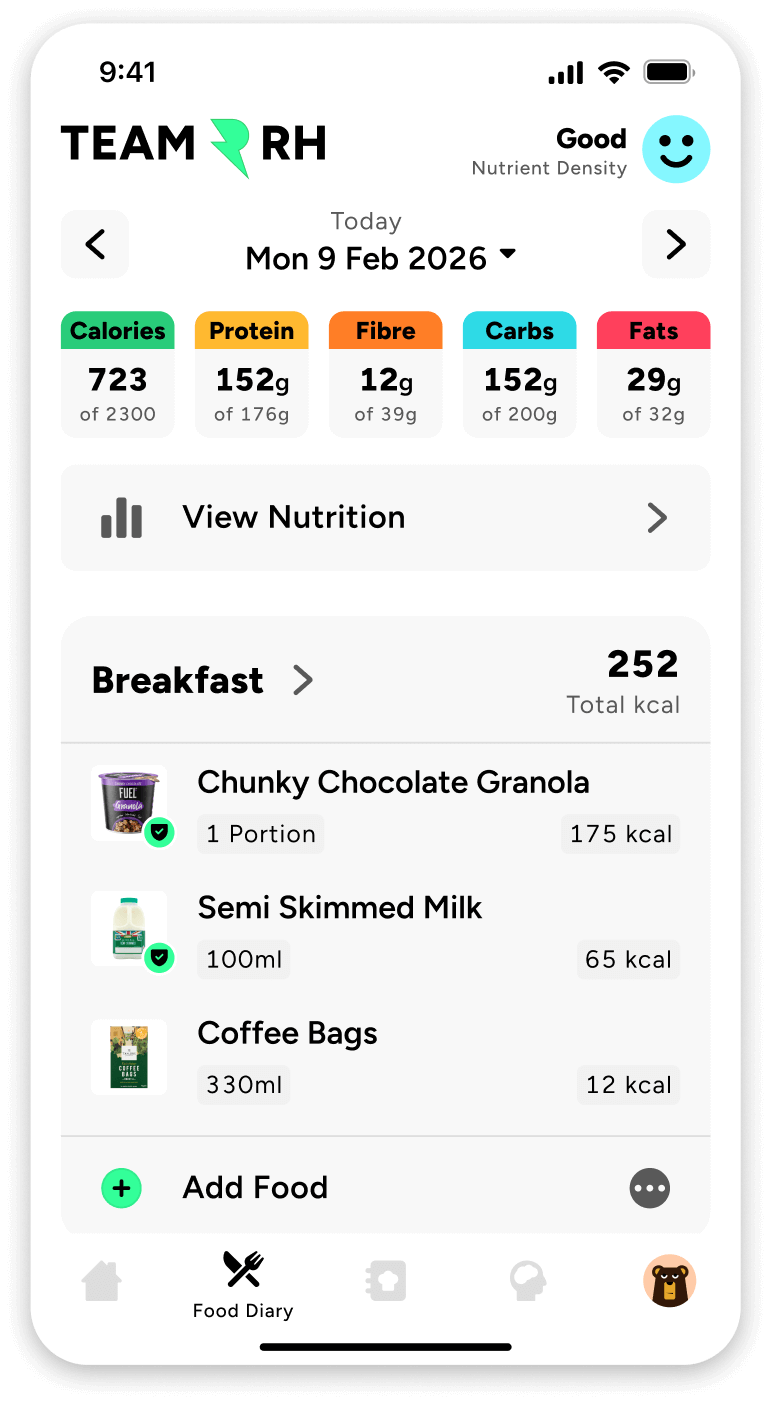
One useful thing about food tracking is that it can expose the difference between what we think we eat and what we actually eat.
A splash of oil, an oversized portion of cereal or a few snacks grabbed while cooking can easily be forgotten. None of these foods needs to disappear, but understanding their calorie content makes it easier to decide where they fit.
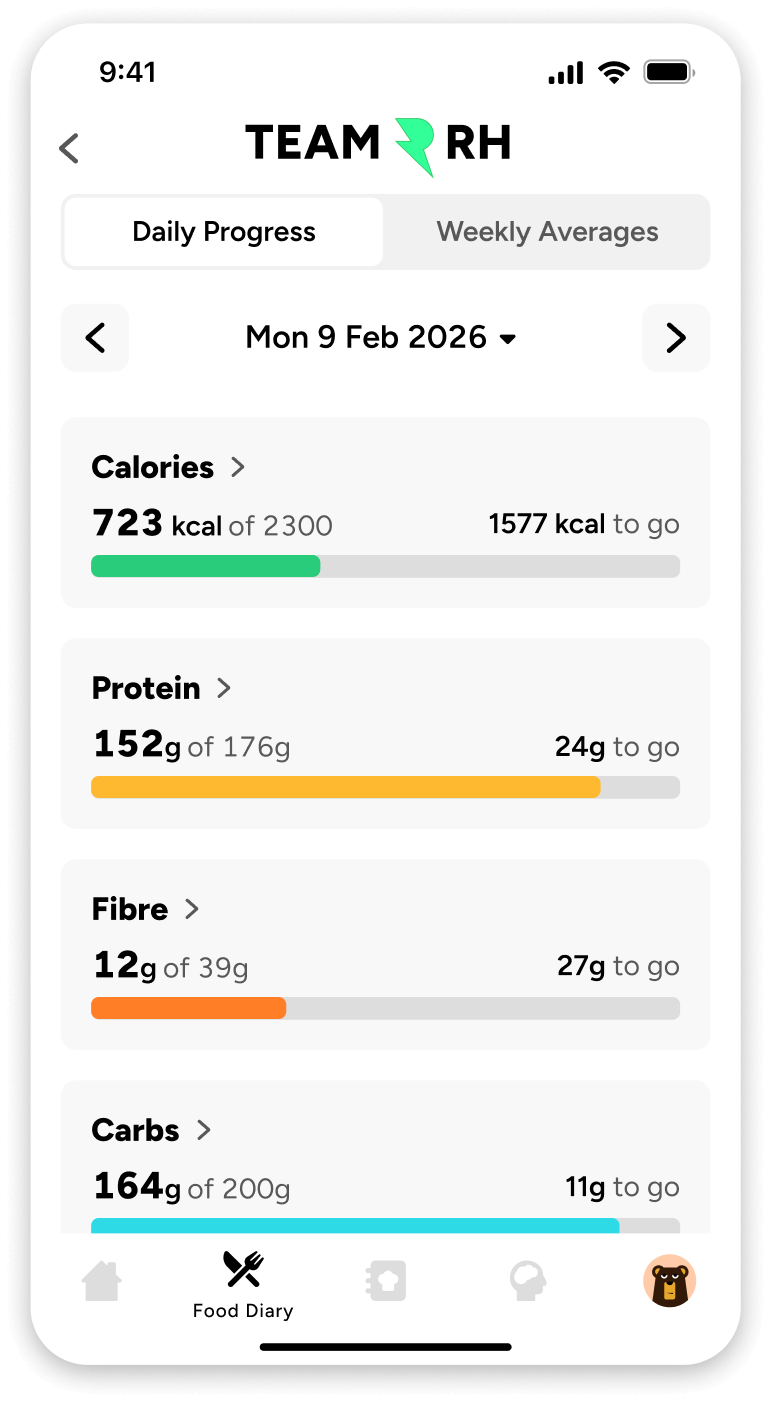
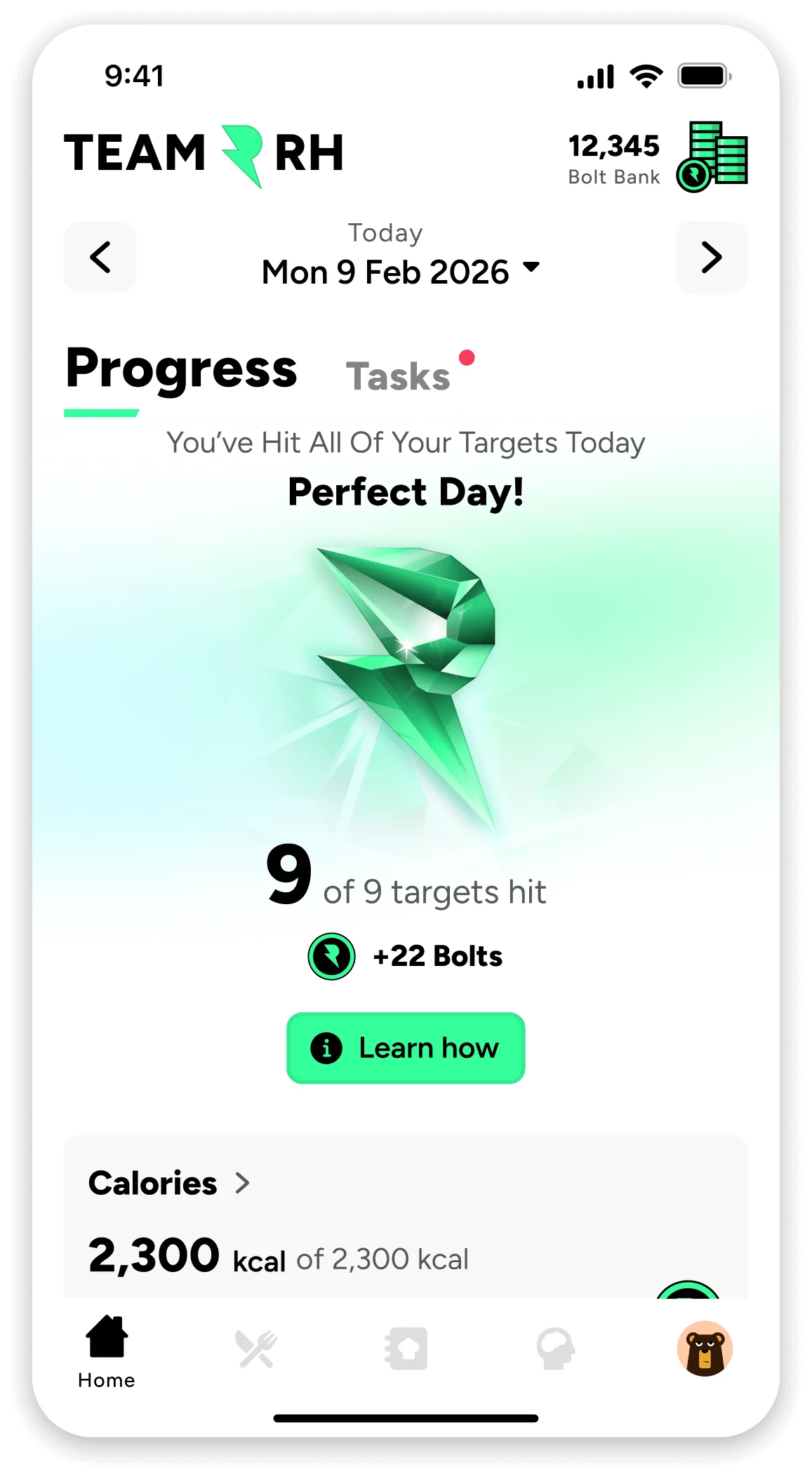
The Team RH Fitness app gives members personalised calorie and nutrition targets and includes a food tracker with a verified UK food database and barcode scanner. Protein and fibre targets are also part of the plan, alongside a personal step goal and optional workouts.
That combination makes more sense than simply handing someone a list of “healthy foods” and expecting them to survive on willpower.
A normal day might still include:
- Filling meals built around protein, fibre, fruit, vegetables and other nutrient-rich foods
- A portion of chocolate, dessert, pizza or another favourite food that fits within the day’s calories
There is room for enjoyment without pretending nutrition does not matter.
Your diet has to survive Saturday night
This is probably the test that gets overlooked most often.
A weight loss plan does not only need to work while you are meal prepping at home. It has to survive birthdays, meals with friends, busy workdays, family dinners and those evenings when cooking something elaborate is the last thing you want to do.
If your plan falls apart whenever real life happens, maintaining it for months is going to be difficult.
Team RH Fitness tries to tackle this by making accountability part of normal eating rather than asking members to create a completely separate “diet life.” The app also provides recipe inspiration, progress tracking and coaching support when members need help staying on course.
This approach can also help with portion control. You begin to see that enjoying pizza and staying within a calorie deficit are not automatically contradictory. Sometimes the answer is simply having an appropriate portion and making sensible choices across the rest of the day.
What happens after the weight comes off?
This is where restrictive diets can run into another problem.
If losing weight required giving up everything you loved, what happens when you reach your goal? You either keep avoiding those foods indefinitely or slowly return to your previous eating habits.
Neither option sounds particularly appealing.
Building healthy habits while still eating familiar foods gives you something far more useful: practice. You learn how different meals fit together, how much food you need and how to balance enjoyment with nutrition.
That longer-term thinking is also reflected in Team RH Fitness, which offers a maintenance plan for people who have reached their target and want to keep their weight stable.
Ultimately, a diet should not make you frightened of cake.
You still need consistency. You still need to pay attention to calories, protein, fibre and activity. But there is a big difference between making informed choices and spending months counting down the days until you are finally “allowed” to eat normally again.
For many people, learning how favourite foods can fit into a healthier lifestyle may be much more useful than learning how to avoid them.

Sorry, the comment form is closed at this time.