
29 Oct Motorized Roller Shades vs. Cellular Shades Understanding SmartWings Fabric and Structure Differences
Choosing between motorized roller shades vs cellular shades often comes down to fabric structure, light control, and how each style fits into an existing smart home setup. For those already comfortable with voice assistants and automation hubs, the real decision point is less about brand names and more about construction, openness percentages, and insulation properties. This piece looks at how SmartWings builds its roller and cellular shade lines, and where each structure fits into a connected home.
Roller Shades vs. Cellular Shades: Core Design Differences
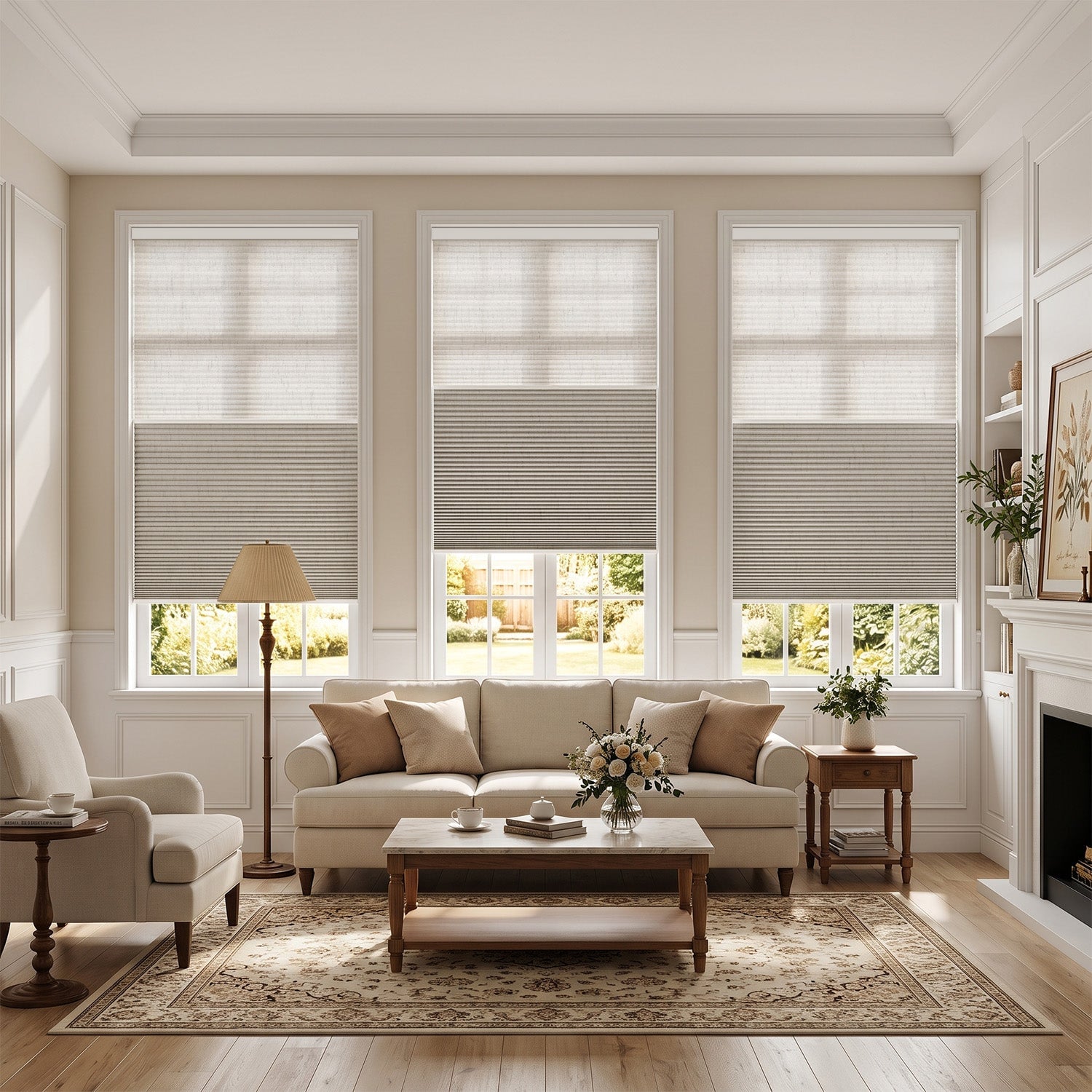
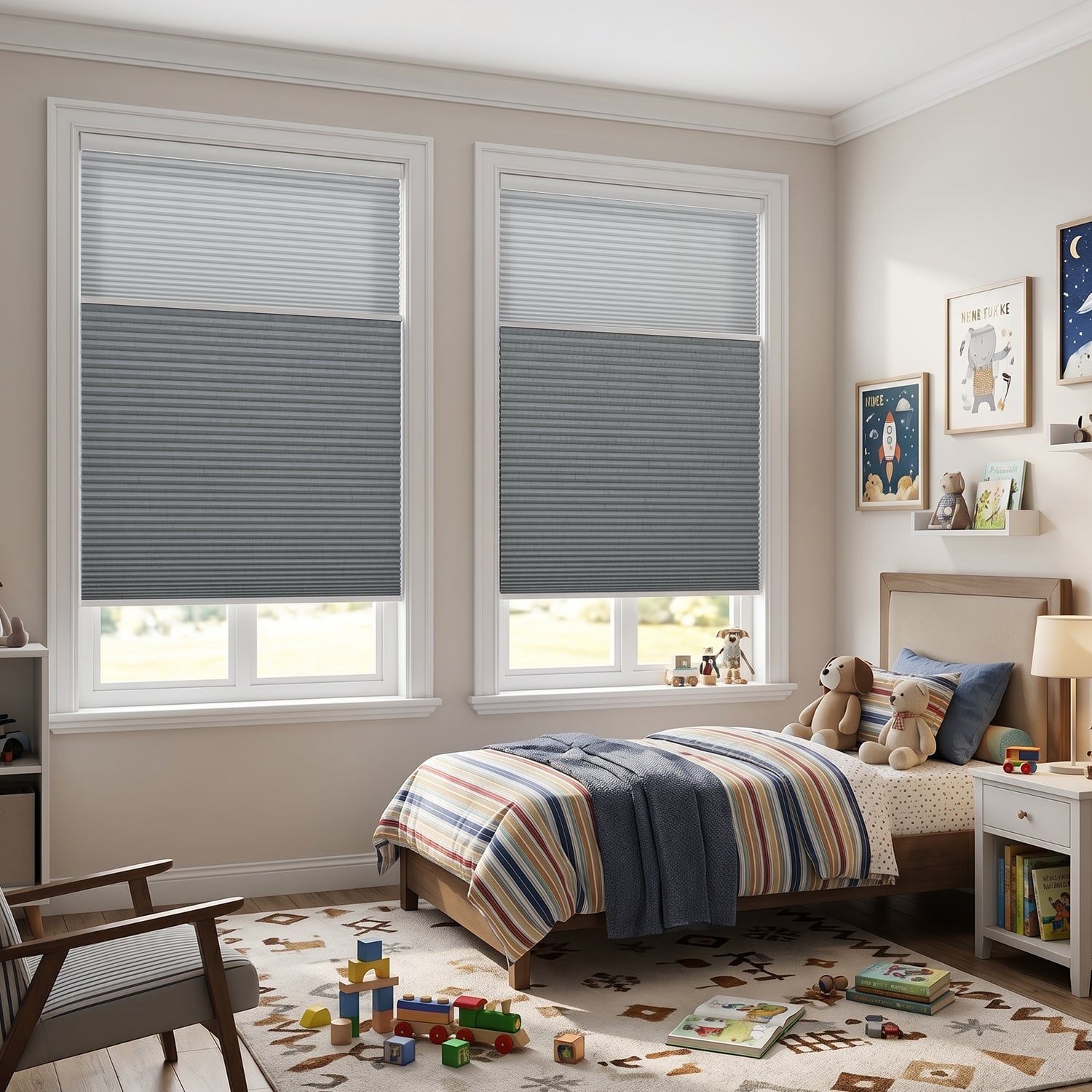
Roller shades use a single flat fabric panel that wraps around a tube, rolling up or down as a motor turns the roll. Cellular shades are built from pleated fabric that folds into honeycomb-shaped pockets which stack together when raised, and SmartWings offers these pleated constructions in named textures including Nowa, Hazel, and Helios. That structural difference changes how each shade looks, how it packs away, and how it handles a window opening. SmartWings produces both formats, giving a practical point of comparison for anyone weighing motorized roller shades vs cellular shades for a specific room.
A roller shade’s flat profile tends to suit a cleaner, more minimal look, while a cellular shade’s pleats add visual texture and a slightly bulkier stack at the top of a window. Neither format is inherently better, since the decision usually depends on fabric needs, window shape, and how much stack height is acceptable. This is why the comparison between roller shades vs cellular shades usually moves quickly into fabric and openness discussions rather than staying purely about silhouette.
Light Filtering, Blackout, and Sunscreen Fabrics in SmartWings Roller Shades
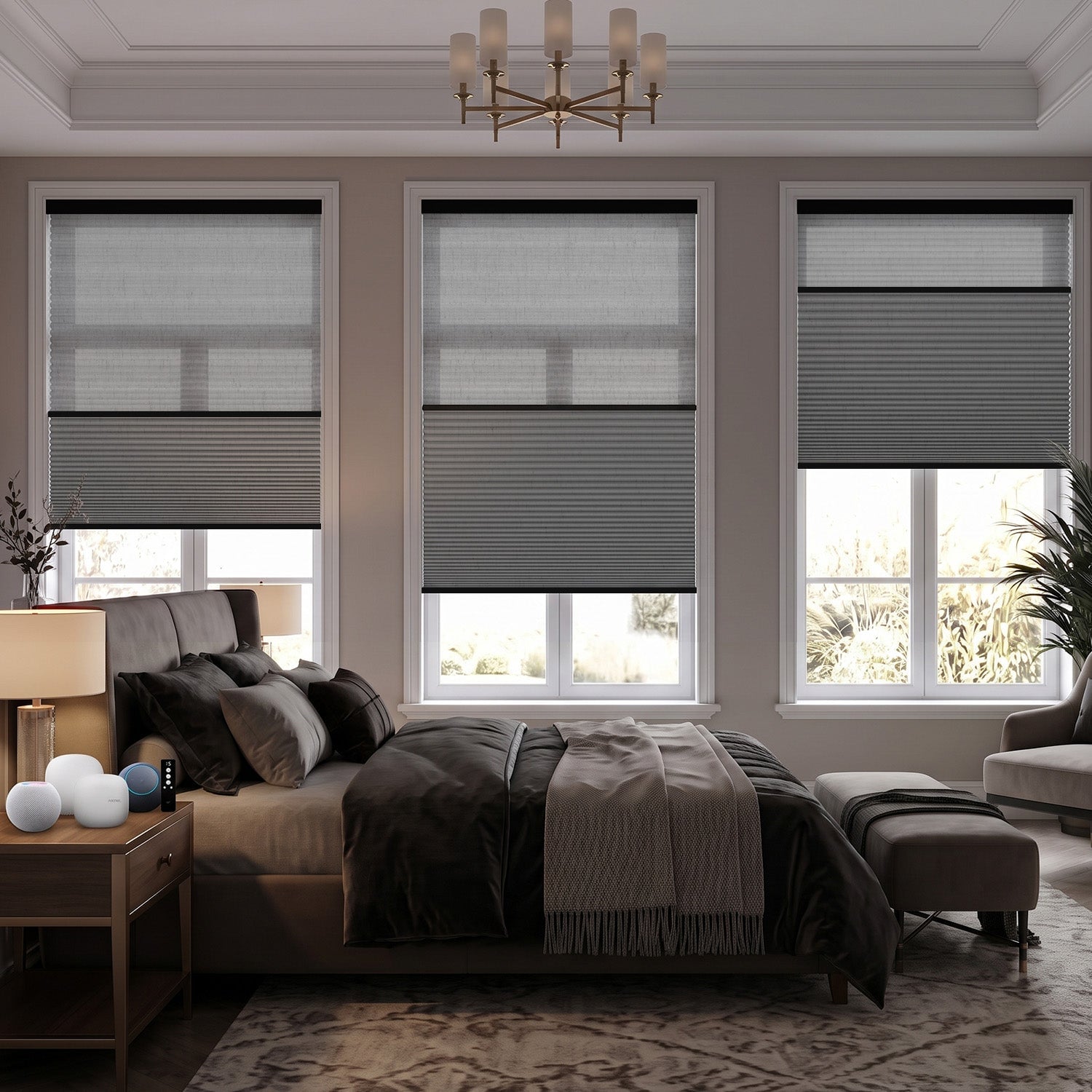
SmartWings roller shades come in several fabric categories, each built for a different light scenario. The lineup includes Light Filtering Roller Shades with 70% Blackout in the Safari fabric, 100% Blackout Linen, and 100% Blackout options in both Safari and Vigor fabrics. There is also a Light Filtering 50% Blackout PVC Free Sunscreen fabric, which blends partial blackout performance with a sunscreen weave.
These fabric choices matter because blackout ratings describe how much light a fabric blocks rather than how dark a room looks by design alone. A 70% blackout fabric still lets some daylight pass through, while a 100% blackout fabric is built to block light almost entirely. Anyone comparing motorized roller shades vs cellular shades for a bedroom or media room will likely weigh these blackout percentages heavily, since cellular shades handle blackout differently through layered cell construction rather than a single opaque panel.
Understanding Openness Percentages in Solar Shades
Solar or sunscreen shades are measured by openness percentage, which describes how much of the fabric weave is open versus woven tight. SmartWings offers solar shades in the Aventus fabric at 1%, 3%, and 5% openness, along with a Linen Solar Shade in Dune fabric at 5% openness. On the opposite end, the Metis fabric is offered as a Blackout Solar Shade at 0% openness.
A lower openness percentage, such as 0% or 1%, blocks more glare and outside visibility while still being classified under the solar shade category. A higher openness percentage, like 5%, lets more outside view and daylight through the weave. These openness figures give a concrete way to compare light control across the roller shade lineup, independent of the blackout-rated fabrics described earlier.
Cellular Shade Constructions: Honeycomb Fabrics and Insulation Properties
Fabric samples for the honeycomb range are available separately for each texture, and the sample kits include a measuring guide and worksheet for planning. This lets a buyer compare color and texture against the trapped-air cell structure before settling on a specific cellular fabric. The pleated design itself is the core mechanical difference from a flat roller panel, since the pockets fold flat when the shade retracts.
Because the pleated cells trap air pockets between layers, cellular shades are generally associated with insulation performance in the broader shade category. The honeycomb structure itself remains the defining feature worth noting, since no single insulation rating is published across the cellular line. This structural distinction is central to the motorized roller shades vs cellular shades comparison, since roller shades rely on fabric density alone rather than trapped air layers.
Motorized Levitate and Day/Night Systems: Advanced SmartWings Options
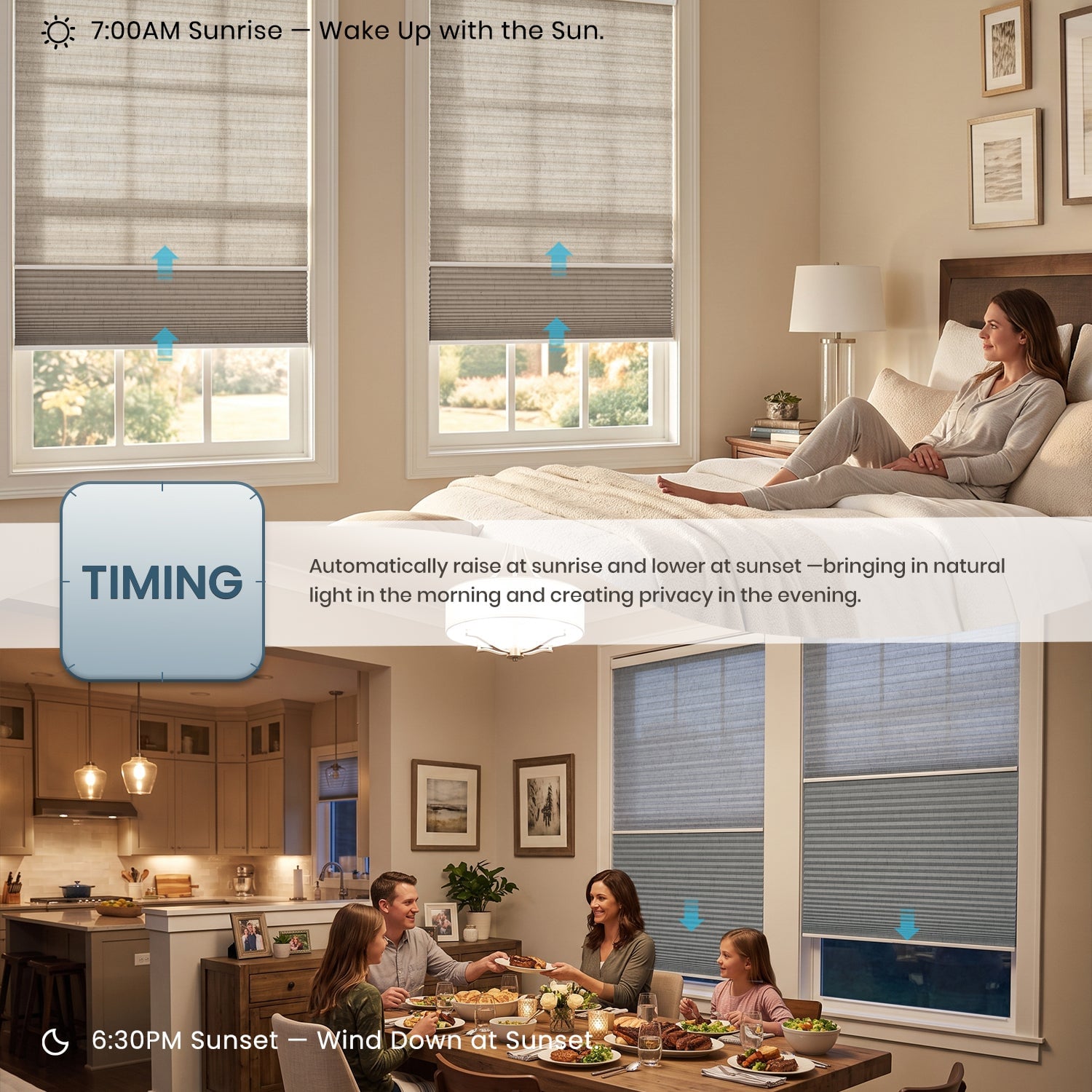
SmartWings offers a Motorized Levitate Linen Cellular Shade and a Motorized Day/Night Linen Cellular Shade, both built in the Nowa Designer Texture Helios fabric. The Day/Night naming points to two fabric layers designed for different lighting conditions within one shade system, while Levitate is marketed as a distinct motorized cellular option. Both remain part of the honeycomb product family rather than the flat roller shade family.
For drapery needs, a separate Motorized Drapery and Curtain line includes a 98% Blackout fabric called Lachesis, plus a 90% Blackout drapery fabric, a Dreamscape Sheer fabric, and a Linen Drapery 50% Blackout fabric called Daphne. These drapery options sit outside the roller and cellular categories but round out the broader motorized fabric range available across the catalog.
Integration Points and Automation Scenarios for Each Shade Type
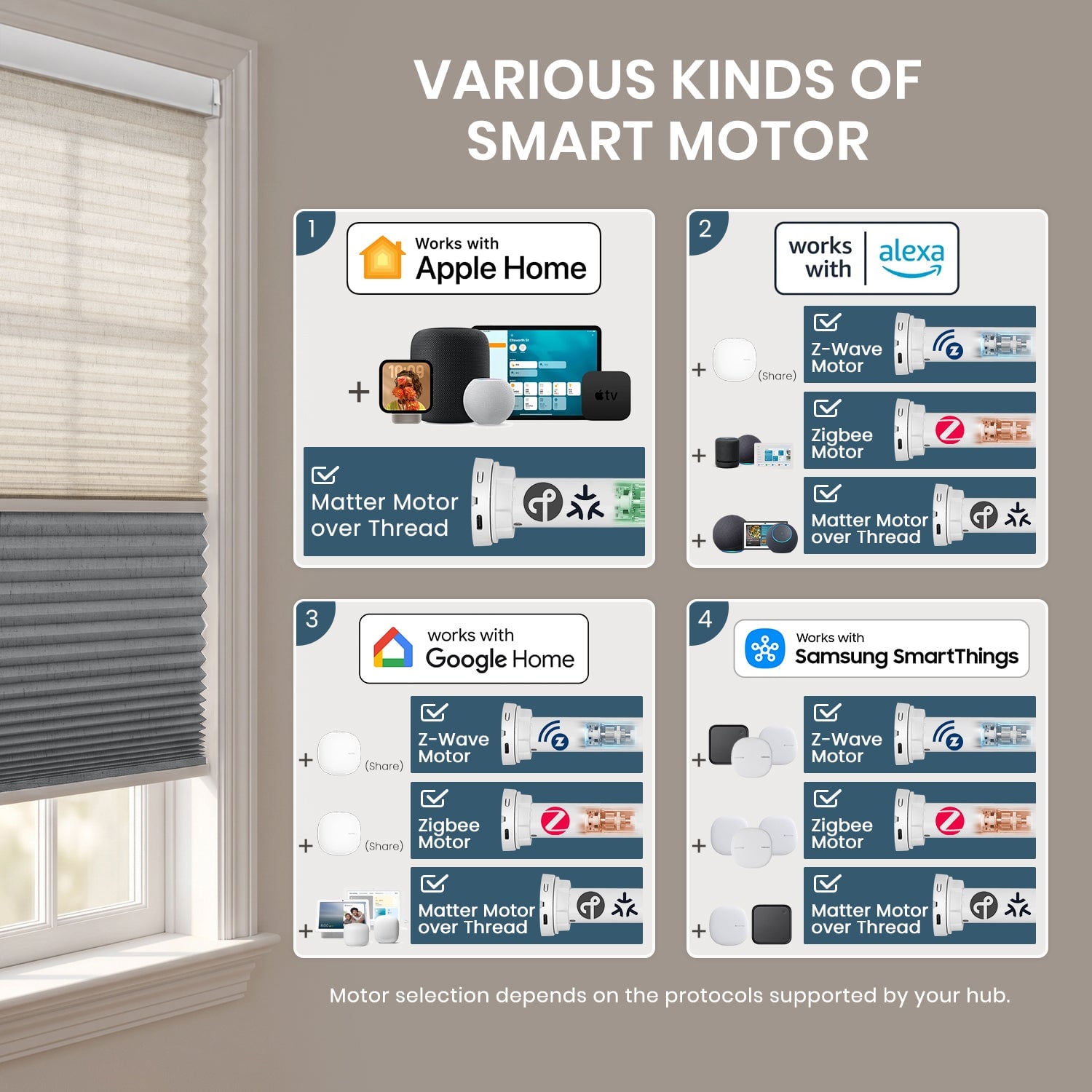
Both roller and cellular lines connect to the same set of smart home platforms, including Apple HomeKit, Amazon Alexa, Google Home, SmartThings, Home Assistant, Hubitat, Control4, Crestron Home, RTI, and ELAN. Control happens through a physical remote, a mobile app, or voice commands, and schedules can be set around sunrise and sunset, fixed positions, or broader scene control. That shared integration layer means the structural differences discussed earlier, not the automation options, are what actually separate roller from cellular shades in daily use.
Installation is also consistent across the roller shade range, where a single person can mount brackets and snap a valance into place without extra tools. This matters for anyone building out a multi-room automation scenario, since roller and cellular shades can be installed with a similar process even though their fabric structures differ substantially. The practical result is that platform compatibility rarely drives the roller versus cellular decision, while fabric, openness, and blackout ratings do.
- The Light Filtering Roller Shade in Safari fabric is rated at 70% blackout for rooms where some daylight is still desired.
- The 100% Blackout Linen and 100% Blackout Safari roller fabrics are built for rooms requiring near-total light blocking.
- The 100% Blackout Vigor fabric offers another full blackout option within the roller shade range.
- The Light Filtering 50% Blackout PVC Free Sunscreen fabric combines partial blackout with a sunscreen weave structure.
- Solar shades in Aventus fabric are available at 1%, 3%, and 5% openness for varying glare control needs.
- The Dune Linen Solar Shade is offered at 5% openness for a softer daylight view.
- The Metis fabric is offered as a 0% openness Blackout Solar Shade for stronger glare and visibility control.
- The Motorized Drapery and Curtain Lachesis fabric carries a 98% blackout rating, while the Daphne linen drapery fabric is rated at 50% blackout.
Between the two formats, the choice tends to rest on fabric behavior rather than on automation features, since both roller and cellular lines plug into the same smart home platforms. What differs is how light, glare, and pleat structure interact with a specific window and routine.

Sorry, the comment form is closed at this time.