
30 Oct Portable Power Stations and Home Battery Backup Understanding BLUETTI’s Clean Energy Range
Power outages and remote work have pushed many households to look closer at portable power stations home backup options, weighing lightweight travel units against larger systems built to keep a house running. The category spans small grab-and-go batteries through to expandable setups meant to sit quietly in a garage until needed. BLUETTI US has built a range that stretches across that whole spectrum, from pocketable chargers to multi-battery home systems.
Power Banks, Power Stations, and Home Battery Systems Compared
A portable power station is essentially a battery pack with built-in outlets, letting devices and small appliances run without a wall connection. Home battery systems serve a related but different purpose, storing larger amounts of energy and switching in automatically when grid power fails. The line between the two has blurred recently, as manufacturers design units light enough to travel but strong enough to back up a refrigerator or a few circuits. That overlap matters before comparing specific products, since capacity, output, and portability all trade off against one another, and it is the core tension behind most portable power stations home backup comparisons.
BLUETTI’s Lightweight Portable Options: Elite 30 mini and Elite 100 Series
The Elite 30 mini sits at the small end of the BLUETTI US lineup, offering 288Wh of capacity and 300W of output in a 3.3kg body. It includes a built-in 140W retractable USB-C cable with two-way charging, seven output ports, and a rated cycle life of 6,000+ charges. Five charging paths are available, including AC, solar, the USB-C cable, car charging, and an optional charger expansion, with pass-through charging reaching 80% in 46 minutes. The Elite 100 V2 moves slightly up in size while staying travel-friendly, weighing around 25lbs with a 17L footprint and a hidden carry handle. It supports turbo AC charging to 80% in 45 minutes and accepts up to 1,000W of solar input through a built-in MPPT controller, reaching a full charge in roughly 70 minutes under those conditions.
Mid-Capacity Solutions: Elite 200, Elite 300, and Elite 400
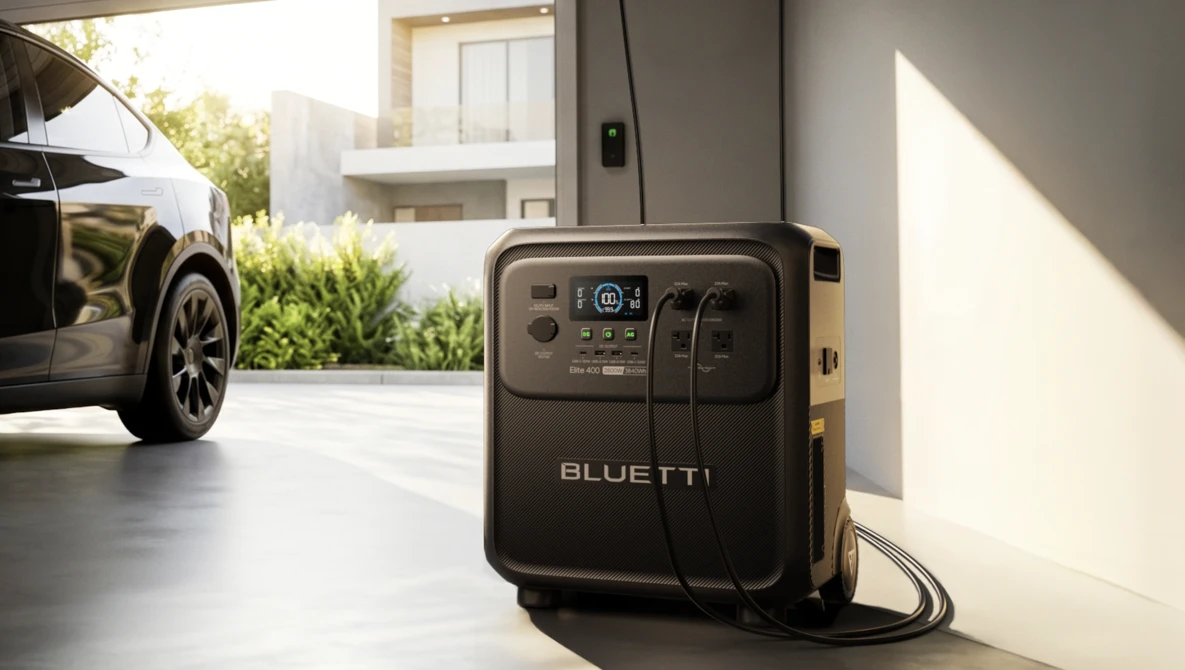
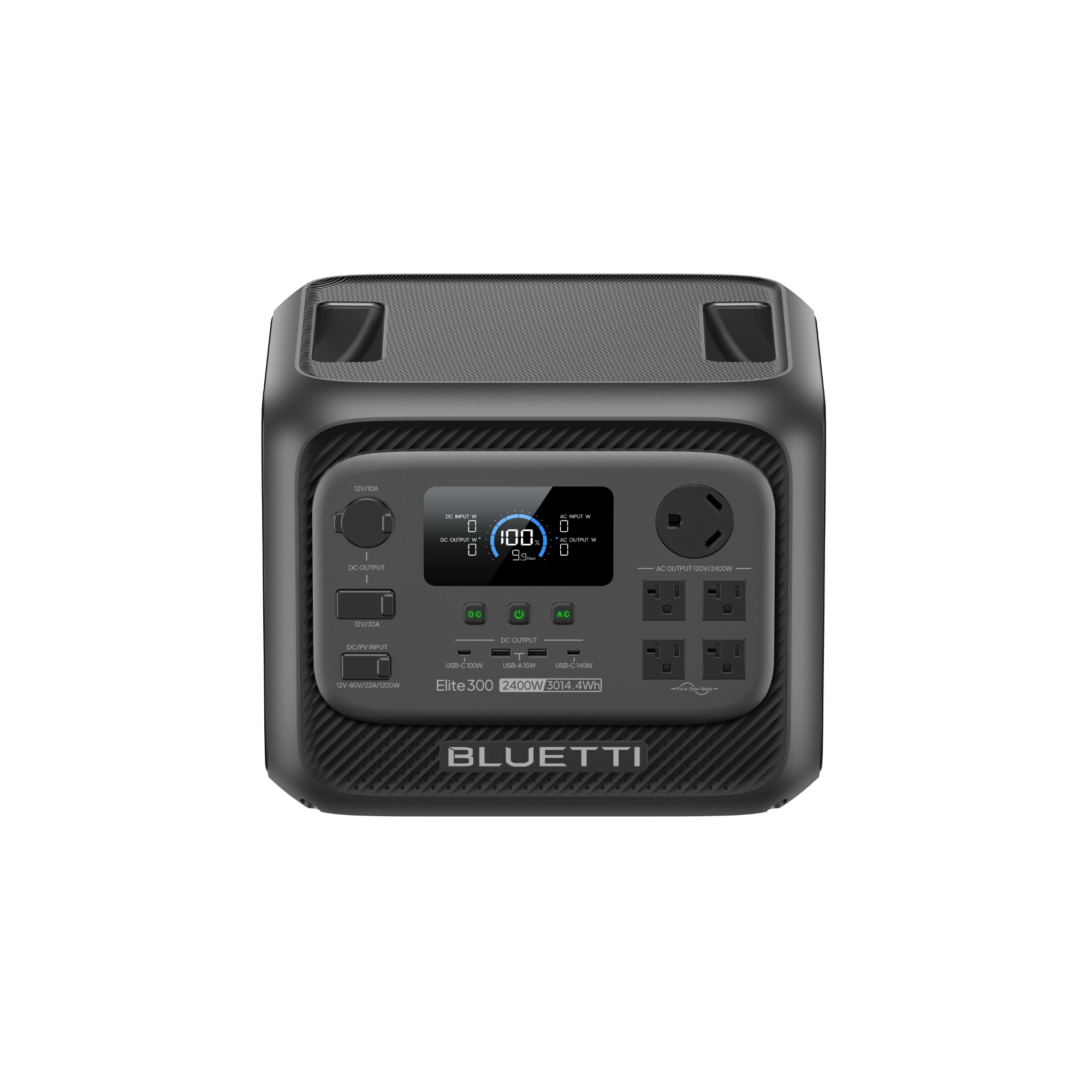
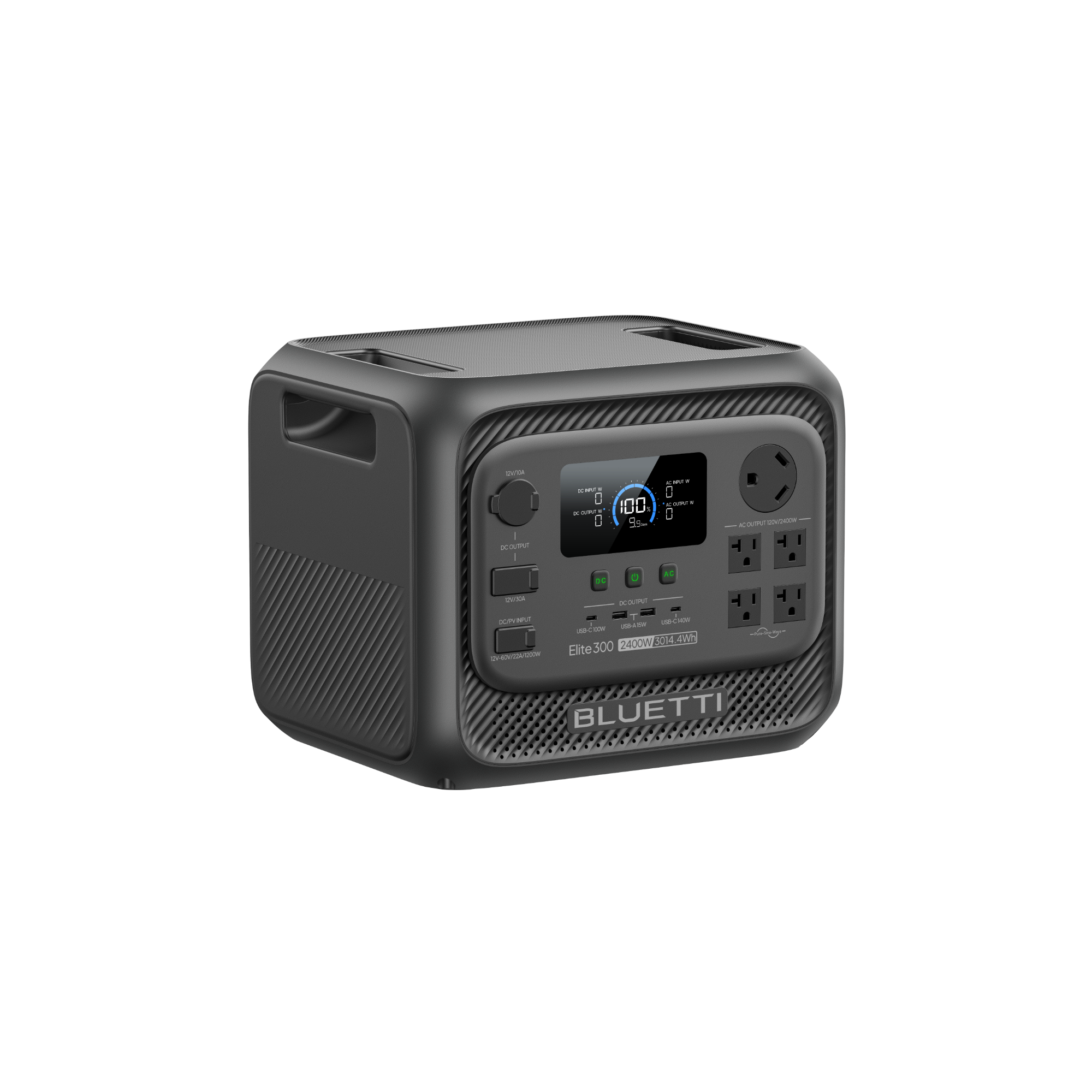
Stepping up in capacity, the Elite 200 V2 and Elite 300 bridge portable use and light home backup. The Elite 300 is described as the smallest 3kWh portable power station available, with 3,014Wh of capacity and 2,400W of output, expandable to 4,800W for surge loads. It includes a 10ms UPS switch, a TT-30 RV outlet, a 12V/30A DC port, and app-based monitoring over Bluetooth and Wi-Fi. The Elite 400 extends capacity further, offering 3,840Wh with 2,600W of output, sitting between portable convenience and sustained duty for appliances like refrigerators and routers. This middle segment of the BLUETTI US catalog shows how portable power stations home backup needs can overlap within a single unit.
Scalable Home Backup: The Apex 300 and Expandable Battery Modules
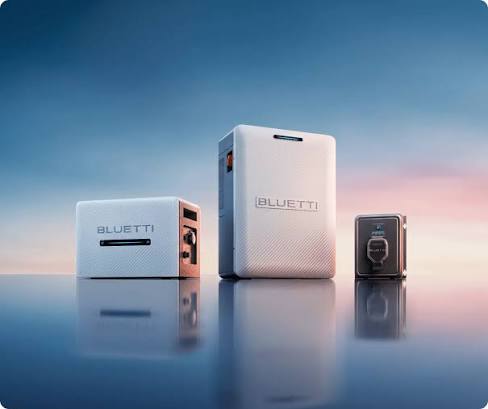
The Apex 300 line is built specifically around expansion rather than fixed capacity. On its own it delivers 3,840W of output with 2,764.8Wh of storage, but it can be paired with B300K or B500K battery modules to grow well beyond that baseline. Pairing it with a single B300K module raises capacity to 5,529.6Wh, while two B300K modules push the total to 8,294.4Wh, and either configuration keeps the same 0ms UPS auto-transfer behavior for critical loads. Larger setups exist too, including configurations that link two Apex 300 units with a Hub A1 accessory to reach 7,680W of output and 11,059.2Wh of capacity. BLUETTI US also lists the FridgePower kit as a narrower, dedicated solution, built specifically to keep a refrigerator or freezer running through an outage.
Solar Integration and Charging Options Across the Range
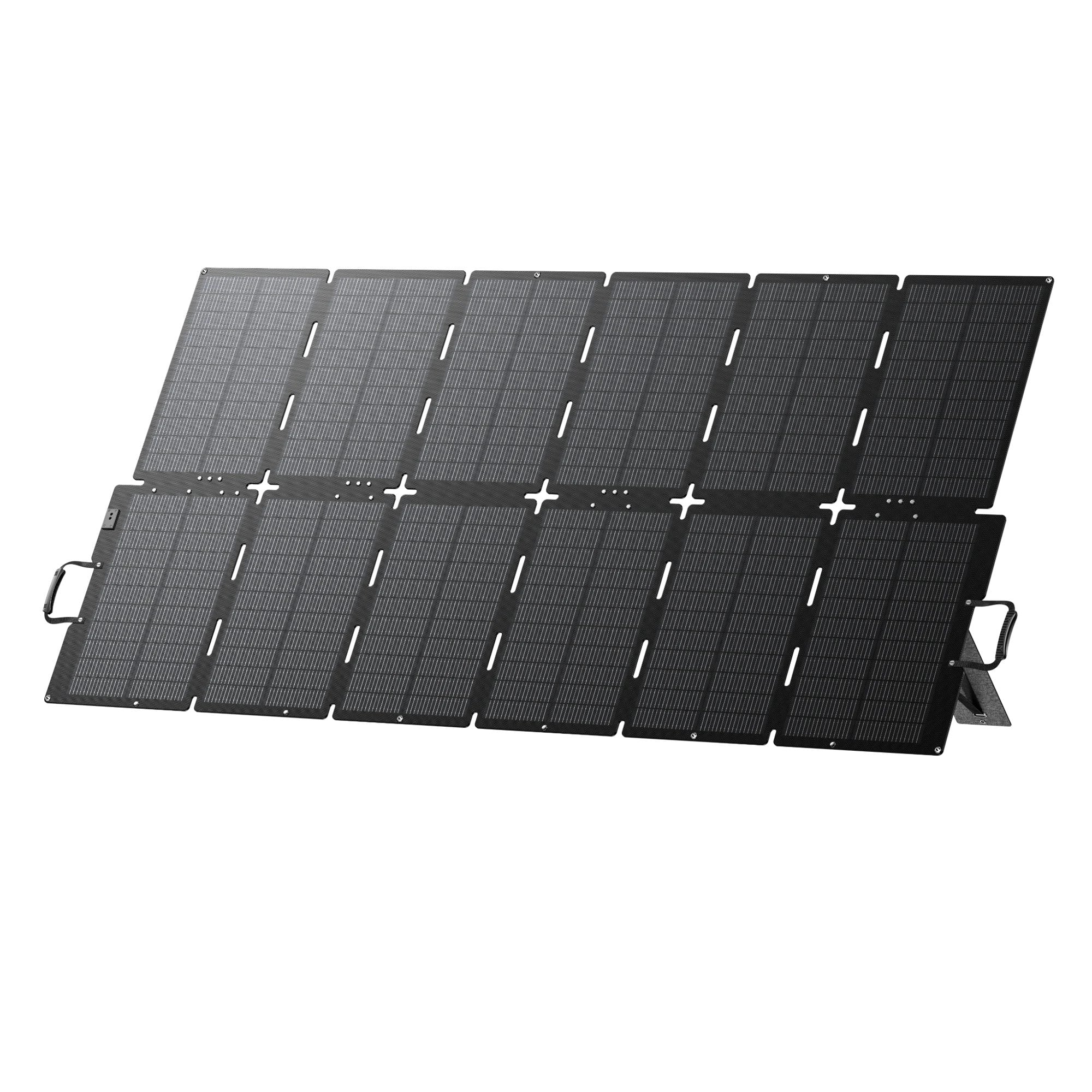
Solar charging runs through nearly every product line rather than being an add-on reserved for larger units. The Elite 300 and Apex 300 are both offered in bundles with 350W or 500W solar panel configurations, letting a buyer pair capacity with a matched input. An Apex 300 setup combining a B300K module with two 350W panels reaches a combined 700W of solar input on top of the expanded 5,529.6Wh capacity, showing how storage and solar input scale together rather than separately. A standalone 500W solar panel is also sold, which can be added to compatible units independently of a bundle. That flexibility means solar charging scales alongside battery capacity rather than being capped at one fixed input level, which matters when comparing portable power stations home backup kits by how far they can expand.
BLUETTI’s Technology and Design Philosophy
Across its listings, a few consistent design choices repeat rather than treating each product as a one-off. UPS switching under 10ms appears on multiple units, aimed at keeping sensitive electronics like security systems or aquariums running without interruption. LiFePO₄ battery chemistry is specified for the Apex 300 expansion modules, and cycle-life figures of 6,000+ charges appear on both the Elite 30 mini and Elite 300. App-based monitoring, covering battery status and remote control, is also featured on multiple models rather than limited to a single flagship line. BLUETTI US states it operates across 120+ countries and regions, with 3.5M users and 847 patents to its name.
- Portable units like the Elite 30 mini and Elite 100 V2 prioritize low weight and compact dimensions for carrying between locations.
- Home backup systems such as the Apex 300 prioritize expandability through add-on battery modules rather than a fixed, unchangeable capacity.
- Travel-oriented units rely on built-in cables and car charging options suited to mobile use.
- Home systems lean on solar bundles and UPS switching suited to stationary outage response.
- Portable power stations typically top out around a few kilowatt-hours, whereas linked home backup configurations can scale into double-digit kilowatt-hour territory.
- Dedicated appliance backup, such as the FridgePower kit, narrows its design around one task rather than general-purpose portability.
Choosing between portable power stations home backup setups and dedicated travel units ultimately comes down to how much capacity growth and outage resilience a given situation calls for. The range, from the Elite 30 mini through the modular Apex 300 ecosystem, covers both ends without forcing a choice between light carrying and larger-scale backup capability.

Sorry, the comment form is closed at this time.