
30 Oct OutfitR E-Bike Racks vs. Regular Bike Racks Product Line Comparison
Shopping for a carrier often starts with one basic question, e-bike racks vs regular bike racks, and the differences go well beyond the label. OUTFITR (US) separates its lineup into two distinct collections, each built around different weight demands and mounting hardware. Comparing the two shows how rack construction is matched to bicycle weight, from frame type to hitch hardware.
E-Bike Racks vs. Regular Bike Racks: Core Differences
Electric bikes weigh considerably more than standard bicycles, so the central distinction between e-bike racks vs regular bike racks comes down to load capacity and the reinforcement needed to carry it safely. OUTFITR (US) engineers its e-bike models around higher capacity ratings and reinforced frames, while the regular bike rack collection stays lighter since it only needs to support traditional bicycles. That split in purpose shapes nearly every other feature across the two product lines.
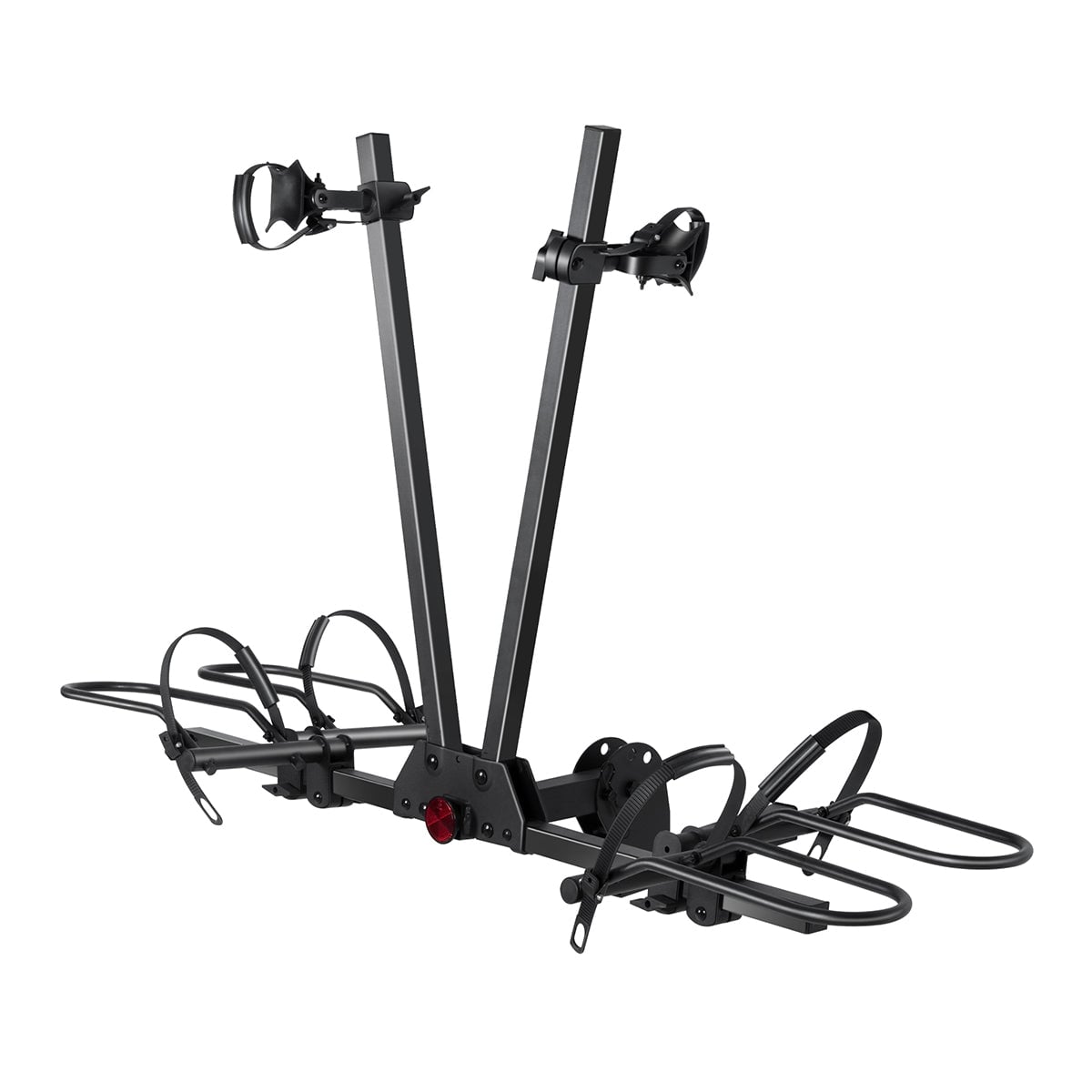
Mounting hardware also diverges between the two lines. E-bike carriers typically rely on tire-clamp or wheel-cradle systems paired with ratchet straps, while several regular bike racks use simpler dual-arm fastening with ratchet straps rather than wheel-clamp hardware. That structural difference affects how each rack handles movement during transport, which matters more once a heavier e-bike is involved.
OUTFITR’s E-Bike Rack Line: Weight Capacity and Load Features
The electric bike hitch collection spans several capacity points, and a built-in loading ramp appears on most models in that range. The 2-Bike Hitch E-Bike Rack with Ramp, Foldable, supports a 200 lb total load, or up to 100 lbs per bike. Further up the line, the 300 LB Off-Road Ultimate 2-Bike E-Bike Hitch Rack with Ramp carries up to 300 lbs total, or 150 lbs per e-bike, and fits a standard 2-inch hitch receiver with an aluminum tray and steel frame build.
For riders with more than two bikes, the 2+2 Add-On Hitch E-bike Rack expands to a four-bike carrier with a 250 lbs total capacity, holding one heavy-duty e-bike or bicycle plus three lighter bikes. There is also a dedicated Etrike Hitch Rack rated for 200 lbs, built with a steel and aluminum structure specifically for electric, fat tire, and folding tricycles. Each of these specifications is tied to its own listed product, so capacity varies by model rather than applying across the whole line.
Single-Bike and Multi-Bike Options in the Regular Bike Rack Collection
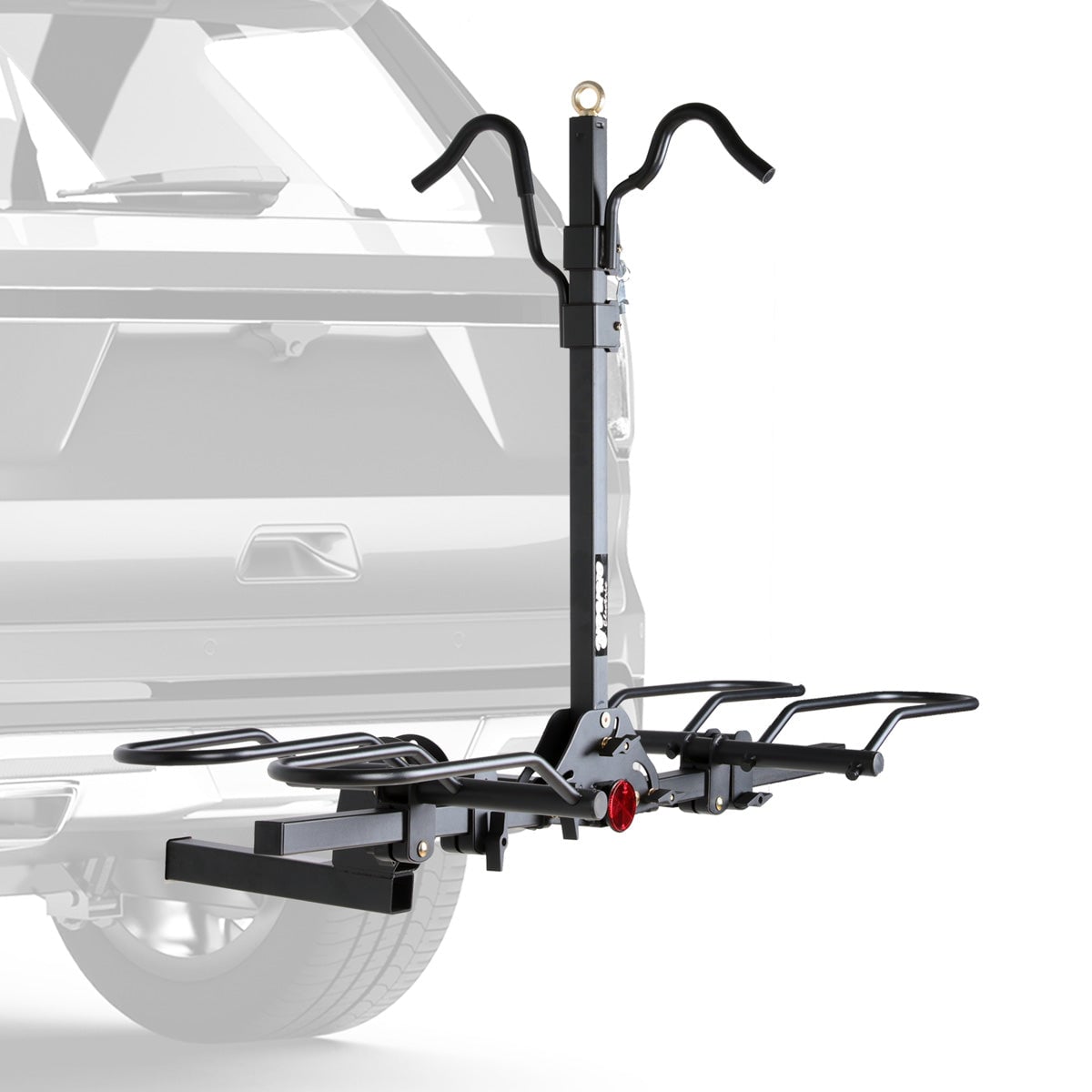
The regular bike rack range includes single, two-bike, and four-bike hitch configurations. The 2-Bike Hitch Rack, Better Fit for Step-Through Bikes, uses soft-padded ratchet straps on dual arms and carries a 200 lbs capacity, with its frame shape adjusted to fit step-through bicycles more easily. A 4-Bike Hitch Rack, Foldable and Tiltable, extends that same foldable and tiltable design to a larger group of standard bicycles.
That simplicity keeps the regular collection oriented toward standard bicycles rather than the added bulk of an electric motor and battery. In addition, several listings in this group pair a locking mechanism with the fold-down frame, which adds a layer of security without changing the fastening method itself. OUTFITR (US) lists these variants alongside the step-through and foldable models within the same regular rack collection.
Ramp and Ease-of-Loading Features Across E-Bike Models
Models such as the Single Hitch E-Bike Rack with Ramp and the 2-Bike Hitch E-Bike Rack with Ramp, Easy Fold and Tilt, both include a ramp so a bike can be rolled into place instead of lifted. That design choice appears consistently throughout the e-bike line, distinguishing it from most of the regular bike rack collection. For a rider comparing e-bike racks vs regular bike racks side by side, the ramp is one of the more visible differences between the two groups.
The 200lbs Capacity Tire-Clamp E-bike Rack with Ramp adds a brake light option alongside its ramp and reinforced steel-aluminum construction, and the brand states it was tested stable at 70 mph highway speeds. Loading hardware like this is specific to the e-bike-focused models rather than something found across the regular carriers. OUTFITR (US) positions the ramp feature as a defining trait of its electric bike hitch collection.
Foldable and Tilt Designs: Portability and Vehicle Compatibility
Both product lines include foldable options, though the mechanisms serve slightly different purposes. On the e-bike side, the 2-Bike Hitch E-Bike Rack with Ramp, Easy Fold and Tilt, Heavy Duty, combines a dual-arm fix with an anti-falloff 360° swivel design and secure wheel cradles. OUTFITR (US) describes this as part of an anti-wobble system meant to keep e-bikes from swaying against the vehicle during transport.
In the regular bike rack collection, the 2-Bike Rack, Foldable and Tiltable, and its locking variant offer similar fold-down convenience without the added wheel-cradle hardware. Vehicle compatibility stays broad across the full range, since most models fit a standard 2-inch hitch receiver and work with cars, SUVs, trucks, trailers, and RVs. This compatibility is one more point where OUTFITR (US) keeps both collections on common ground.
Heavy-Duty vs. Lightweight: Choosing Between Product Tiers
The 300 LB Off-Road Ultimate rack also includes a heavy duty dual safety lock and is built to fit 5-inch fat tire e-bikes, which sets it apart from lighter carriers in the same collection. The regular bike rack collection, by contrast, stays built around a 200 lbs capacity ceiling without that added fat-tire fitment or dual-lock hardware. The gap between the two groups is really a question of what kind of bicycle needs to travel.
The list below summarizes how the two categories separate in practice across the current catalog.
- E-bike racks reach up to 300 lbs total capacity, while most regular bike racks in the lineup cap out at 200 lbs.
- Electric bike models commonly include a built-in loading ramp, a feature largely absent from the regular bike rack collection.
- Several e-bike racks add an anti-wobble system with wheel cradles and a 360° swivel design, while regular racks rely on simpler ratchet-strap fastening.
- Both lines offer foldable designs, though e-bike models combine folding with tilt access more frequently than the regular collection does.
- Regular bike racks such as the step-through model focus on fitting specific bicycle frame shapes rather than carrying extra motor or battery weight.
Across both lines, the range is organized around what a given bicycle actually weighs and how it needs to be held in place. That framing is really what separates e-bike racks vs regular bike racks in practice.

Sorry, the comment form is closed at this time.