
30 Oct Alorair Storm Commercial Dehumidifiers Comparing LGR and Standard Models
Restoration crews often need equipment matched to a specific jobsite rather than whatever unit sits closest to the truck. Alorair the dry air builds several models under its Storm name, and the differences between LGR and non-LGR units matter once moisture loads get heavy. This comparison looks at commercial dehumidifiers Storm models side by side, along with the lighter XDRIER MAX series, to show how capacity, airflow, and coverage differ across the range.
Understanding Storm LGR Technology in Commercial Dehumidifiers
LGR stands for Low Grain Refrigerant, a design approach used in several units built for saturated job sites. The Storm LGR Extreme is rated to remove up to 180 PPD of moisture under saturation conditions, with 85 PPD at AHAM testing standards. It runs on 115V/60 Hz power and draws 5.62A, and it includes an automatic restart feature that resumes the prior setting after a power outage. That restart behavior means a crew does not need to re-enter humidity targets after an interruption, which is one reason commercial dehumidifiers Storm units show up repeatedly on restoration equipment lists.
Storm LGR Extreme and Storm LGR 850X Models Compared
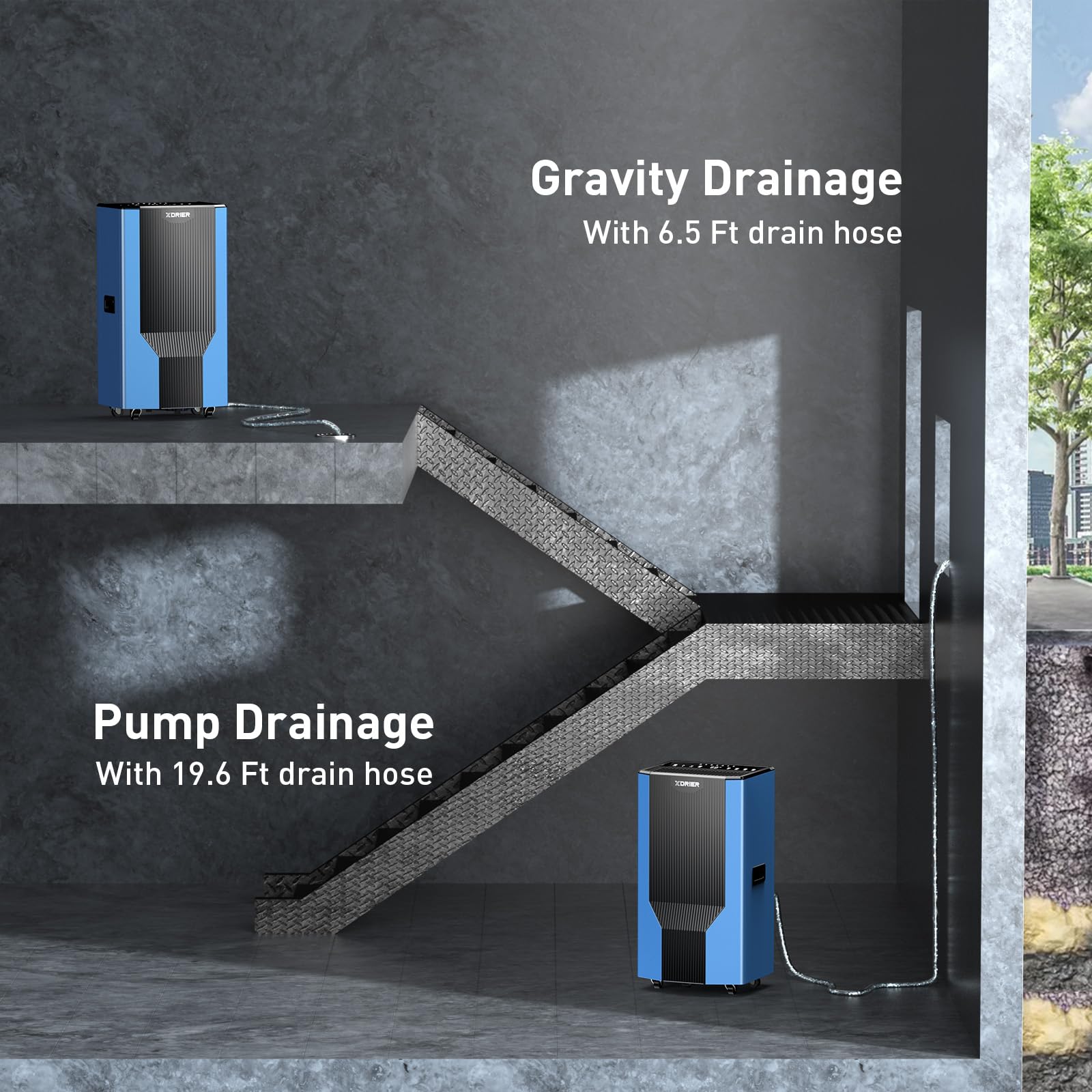
The Storm LGR Extreme and the Storm LGR 850X both carry a 180 PPD saturation rating, though the Storm LGR Extreme ships in a standard configuration or a WiFi Smart App Control configuration while the Storm LGR 850X is built as a Smart Wi-Fi commercial dehumidifier with pump. Both units from Alorair the dry air include pump drainage, letting water route away from the machine without manual emptying during long runs. That shared drainage approach matters most on multi-day jobs where crews cannot check equipment constantly.
One detail worth noting for anyone managing a fleet of dehumidifiers from Alorair the dry air is the app pairing instructions. The manufacture date on a unit’s data plate determines which companion app applies, with older units pairing to one app and newer production pairing to another. Checking that date before setup confirms the right app rather than guessing.
Standard Storm 80X: Specifications and Drying Capacity
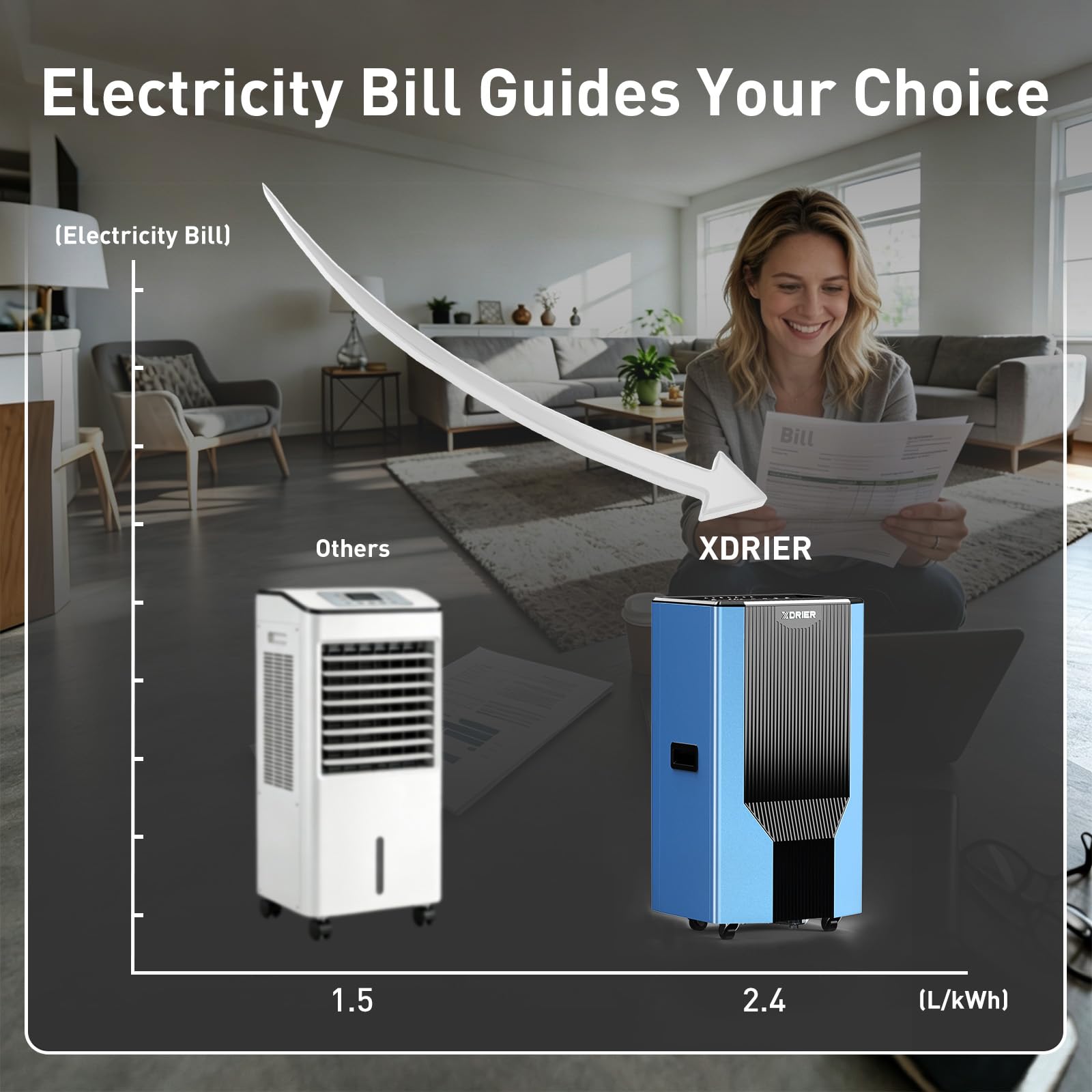
The Storm 80X is positioned as a commercial portable dehumidifier with pump, sized for 2100 sq. ft. spaces. It runs on 115V at 5.3 Amps, with a COP of 2.4L/KWh and a sound pressure level of 60dBA. Airflow reaches 200 CFM, or 340 CMH, which delivers strong airflow for drying performance. At AHAM conditions of 80°F and 60% RH the Storm 80X is rated at 80 pints, and it separately removes up to 170 pints of moisture per day under saturation conditions while using R32 refrigerant with MERV-1 filters and an auto defrosting control system.
XDRIER MAX Series for Residential and Light Commercial Applications
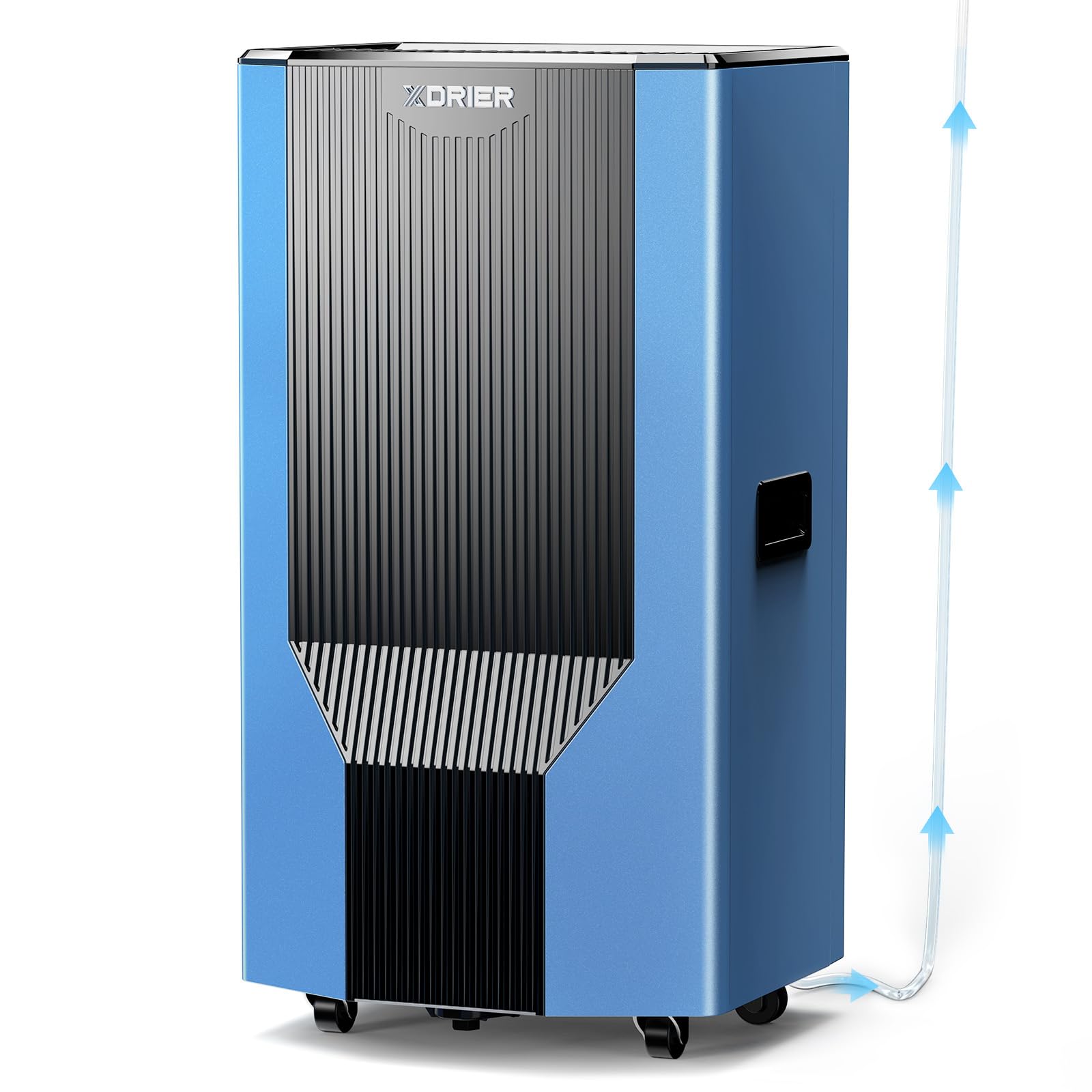
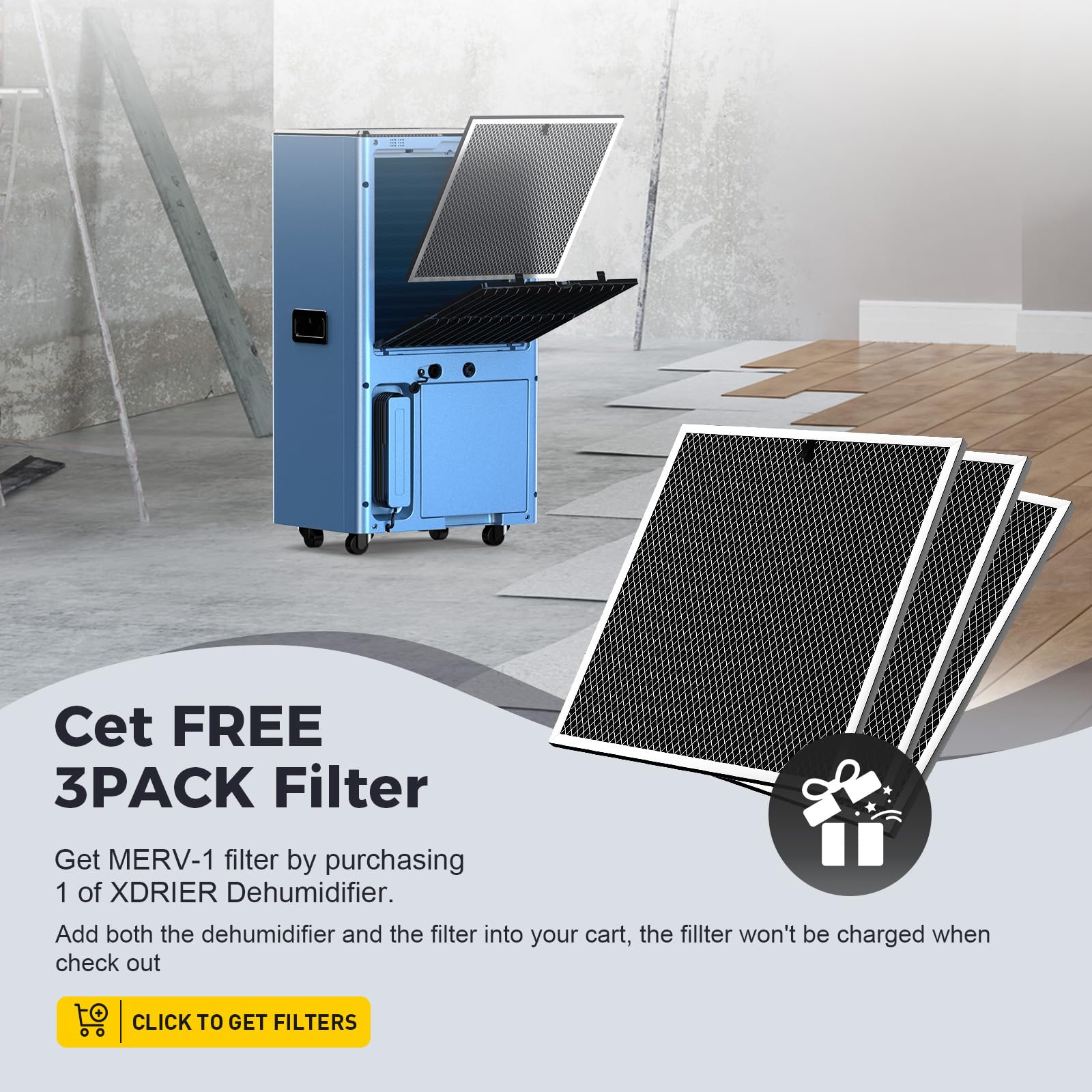
Outside the Storm name itself, the lineup from Alorair the dry air also lists the XDRIER MAX series, described for residential, commercial, and industrial use. The XDRIER MAX 138P is a triple-drain unit rated at 120 PPD at saturation with an AHAM removal capacity of 55 PPD across 1,500 sq. ft., while the larger XDRIER MAX 260P steps up to 198 PPD at saturation with 90 PPD at AHAM across 2,600 sq. ft., and both models pair with a separately available 3-piece MERV-1 replacement filter pack for ongoing maintenance. Both are suited to spaces like offices, gyms, and warehouses, and filter replacement is recommended every 3 to 6 months depending on usage.
Moisture Removal Ratings Across Alorair Storm Tiers
Saturation ratings and AHAM ratings tell two different stories, and that distinction matters when comparing commercial dehumidifiers Storm models against each other. Saturation figures describe performance under heavier, more humid conditions typical of an active flood job, while AHAM figures reflect a standardized test at 80°F and 60% RH. The Storm Ultra from Alorair the dry air, for example, is listed at up to 190 PPD under saturation and 90 PPD at AHAM, and it suits areas sized for that specific model. Reading both numbers together gives a fuller picture than either figure alone when sizing commercial dehumidifiers Storm equipment for a jobsite.
- The Storm LGR Extreme and Storm LGR 850X are both rated at up to 180 PPD under saturation conditions with pump drainage included.
- The Storm 80X delivers 200 CFM of airflow and is sized for a 2100 sq. ft. coverage area.
- The Storm 80X uses an auto defrosting control system to manage its operating cycle.
- The XDRIER MAX 138P and XDRIER MAX 260P are triple-drain models covering 1,500 sq. ft. and 2,600 sq. ft. respectively.
- XDRIER MAX units are built for residential, commercial, and industrial settings rather than exclusively for restoration jobsites.
Water Damage Restoration Combos: Complete System Options
Alorair the dry air also packages its dehumidifiers into combo sets alongside air movers and HEPA air scrubbers. One listed combo pairs a Storm 80X commercial dehumidifier with a HEPA 550 air scrubber and two GF600A air movers, a second pairs two Storm Ultra dehumidifiers with six GE2000HCW air movers and two HEPA 550 air scrubbers, and a third pairs a Storm LGR Extreme WiFi dehumidifier with four GE4000HTC air movers. These restoration packs bundle drying, air movement, and air filtration equipment into a single order rather than requiring separate purchases of each machine.
Air movers within these combos range across several airflow outputs, including 1,000 CFM, 2,000 CFM, 3,000 CFM, and 4,000 CFM units, each with adjustable speed settings and angles. Pairing a higher-capacity dehumidifier like the Storm Ultra or Storm LGR Extreme with multiple air movers reflects how restoration jobs typically combine moisture removal with active air circulation. The combination approach lets a single order cover more of a jobsite’s equipment list at once.
Choosing among the Storm LGR Extreme, Storm LGR 850X, Storm 80X, Storm Ultra, and the XDRIER MAX series comes down to matching PPD capacity and coverage area to the space in question.

Sorry, the comment form is closed at this time.