
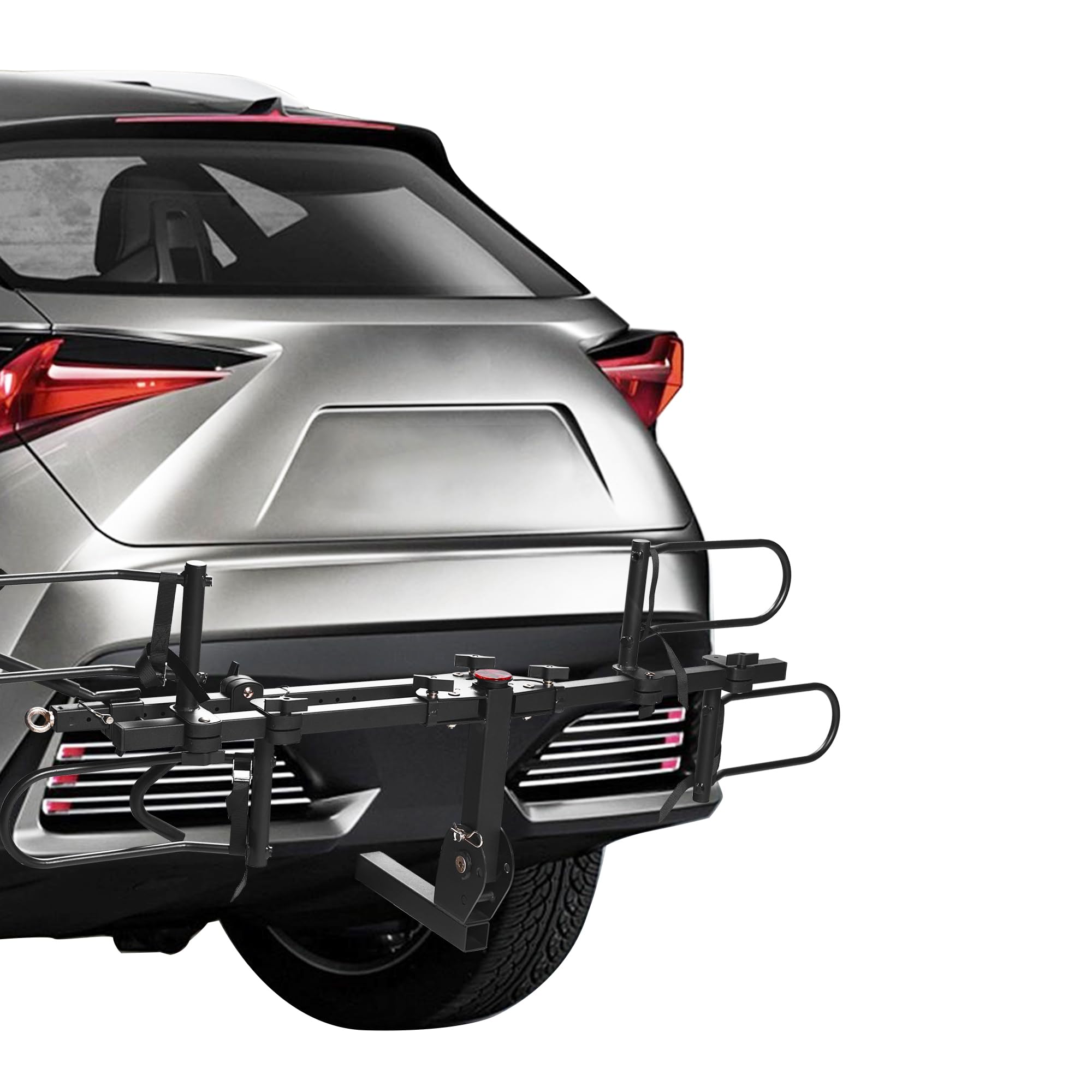
30 Oct E-Bike Racks with Loading Ramps OutfitR’s Solution for Heavy-Duty Transport
Loading a heavy electric bike onto a hitch carrier can be a two-person job without the right equipment. E-bike racks with ramps are built to remove that struggle by letting a rider roll the bike into place instead of hoisting it. OUTFITR (US) builds its lineup around this exact idea, pairing ramp systems with reinforced frames meant for the added weight of electric motors and batteries.
Why E-Bike Racks Need Built-In Loading Ramps
Electric bikes routinely weigh far more than standard bicycles because of their motors and battery packs. Lifting that weight onto a raised hitch tray is not practical for most people, and it raises the chance of a dropped bike or a strained back. A built-in ramp changes the task into a simple push, which is why ramp-equipped carriers have become a distinct category of e-bike racks with ramps rather than a minor add-on feature.
OUTFITR frames its entire e-bike rack collection around this convenience. Its product pages describe the ramp as a way to reduce the need for heavy lifting and make loading hassle-free. That framing runs through nearly every model in the range, from single-bike carriers to multi-bike platforms.
OutfitR’s 2-Bike Hitch E-Bike Rack with Ramp: Core Features and Capacity
The 2-Bike Hitch E-Bike Rack with Ramp, Foldable, and the Easy Fold and Tilt, Heavy Duty model both carry a 200 lb load capacity, supporting up to 100 lbs per bike, though the Heavy Duty version adds a tilt function for trunk access and fits cars, SUVs, trucks, trailers, and RVs. OUTFITR (US) also sells a Foldable with Lock variant of this same rack family for buyers who want integrated locking hardware. Both carriers rely on the built-in ramp as the centerpiece of the design, letting riders roll bikes into position instead of lifting them.
A Single Hitch E-Bike Rack with Ramp is also available for households transporting one e-bike at a time. It follows the same ramp-loading principle, just scaled down to a single carrier arm.
Heavy-Duty Options: The 300 LB Off-Road Ultimate and 200lbs Tire-Clamp Models

For riders with larger or heavier e-bikes, OUTFITR (US) offers the 300 LB Off-Road Ultimate 2-Bike E-Bike Hitch Rack with Ramp. It supports up to 300 lbs total capacity, or 150 lbs per e-bike, and fits a standard 2-inch hitch receiver. The listing notes an aluminum tray and steel frame construction, a heavy-duty dual safety lock, and compatibility with 5-inch fat tire e-bikes, and the unit folds for storage.
The 200lbs Capacity Tire-Clamp E-bike Rack with Ramp and Brake Light takes a different securing approach, clamping the tire rather than relying solely on arm straps. The listing describes it as engineered for both rugged trails and city streets, with a reinforced steel-aluminum build and a 200 lbs capacity described as industry-leading for e-bikes. It also states the rack was tested stable at 70 mph highway speeds.
Anti-Wobble and Security Systems Across the Range

Several models in the collection share a common set of stability features designed to keep bikes from shifting during transport. These details appear repeatedly across the Easy Fold and Tilt lines and the Heavy Duty variants. Together they form the backbone of how the lineup addresses the common complaint of bikes swaying against the vehicle.
- A dual-arm fix structure anchors each bike at two points rather than one.
- An anti-falloff 360° swivel design allows bike arms to pivot without releasing the frame.
- Patent secure wheel cradles hold the front and rear wheels in fixed positions.
- An anti-wobble structure is built into the frame to limit swaying or knocking against the vehicle.
- Soft-padded ratchet straps on dual arms, used on the Step-Through Fit model, hold bikes tightly without damaging frames.
These features are listed across multiple products rather than a single flagship, which suggests OUTFITR treats stability as a baseline expectation for its racks. Riders comparing e-bike racks with ramps against ordinary tray carriers often cite this kind of multi-point anchoring as the practical difference.
Expandable and Specialized Designs: From Etrike Racks to Add-On Models
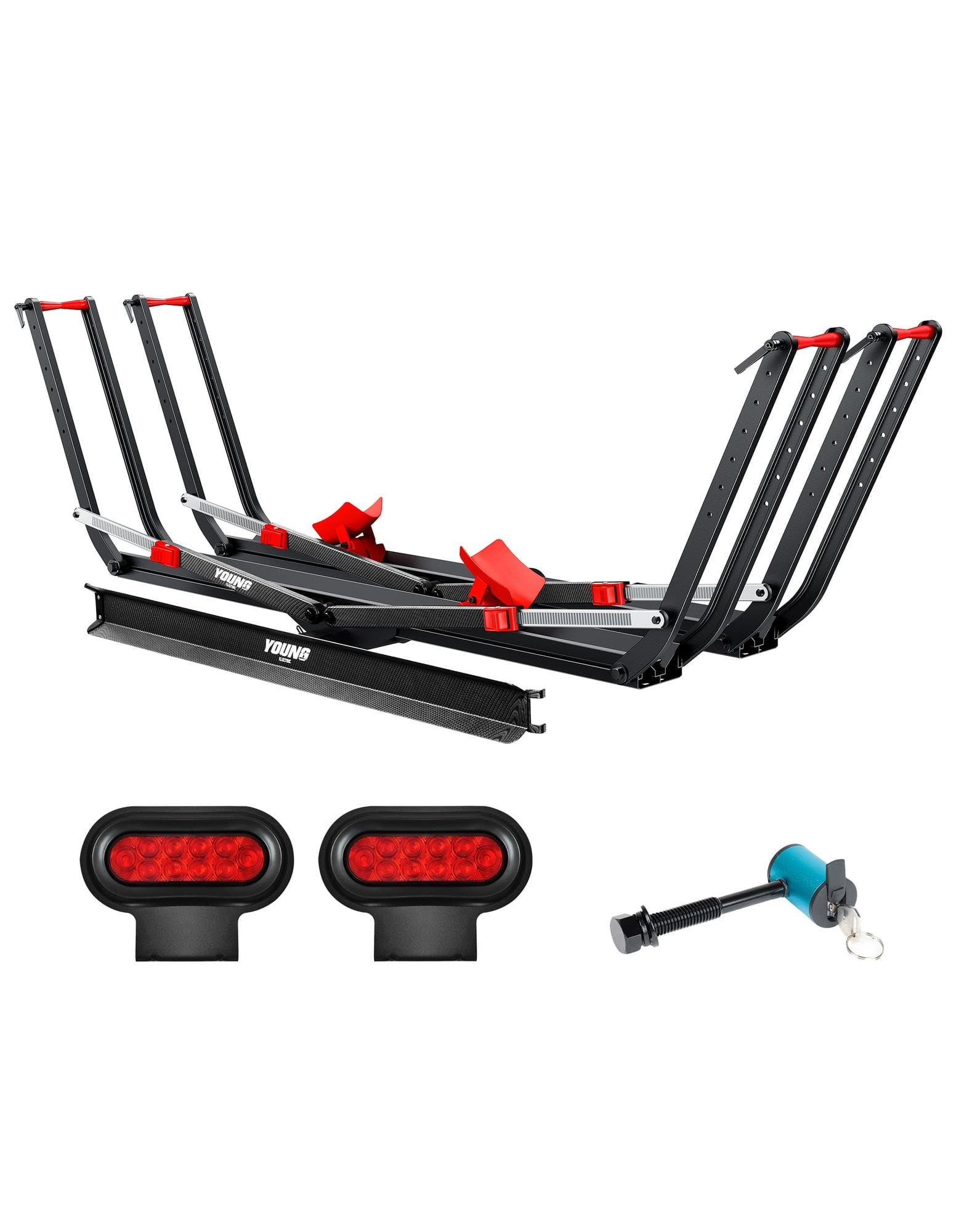
Not every household owns a standard two-wheel e-bike, and OUTFITR (US)‘s range reflects that. The Etrike Hitch Rack is built specifically for electric trikes, with a 200 lbs maximum load capacity and an adjustable carrier designed for adult electric, fat tire, and folding tricycles. It uses a 2-inch receiver and is constructed from steel and aluminum.
For households that need to expand capacity, the 2+2 Add-On Hitch E-bike Rack offers an expandable 4-bike carrier with a 250 lbs total weight capacity. It can hold one heavy-duty e-bike or bicycle at up to 100 lbs, plus three lightweight bikes, and it fits 2-inch receiver hitches. The 3-Bike Hitch E-Bike Rack with Ramp, Foldable, applies the same ramp loading approach to group transport, letting three bikes share one carrier instead of requiring multiple trips.
There is also a standalone accessory worth noting outside the hitch-rack lineup itself. The Foldable Loading Ramp For Bike Racks is sold separately, built from high-strength steel with a 100 lb capacity and a rustproof black powder coating.
Installation and Compatibility Across Vehicles
Across its e-bike rack collection, OUTFITR (US) designs products around the standard 2-inch hitch receiver, a fitting shared by most cars, SUVs, trucks, trailers, and RVs. This common sizing means a single rack purchase can usually move between vehicles without needing a different mount. Folding and tilting mechanisms, found on several models, also make trunk access possible without fully removing the rack.
For hitches that develop play over time, a separate Hitch Tightener is compatible with 1.25-inch and 2-inch hitches, covering classes I through IV. It is intended to reduce movement from a hitch tray cargo carrier, which can matter once a heavier e-bike rack with ramp is mounted for regular use. This kind of compatibility accessory rounds out a lineup that otherwise focuses on the racks themselves.
Taken together, the range points to a consistent idea across sizes and capacities: ramps that remove lifting, frames built for e-bike weight, and anchoring systems meant to keep the load steady.

Sorry, the comment form is closed at this time.