
31 Oct Electric Unicycles vs. Electric Scooters Inmotion’s Range for Different Riding Needs
Choosing between electric unicycles vs scooters often comes down to terrain, portability, and how much balance a rider wants to manage. Inmotion builds both electric unicycles and electric scooters, giving a clearer picture of how the two categories actually differ in practice. The comparison below walks through specific models, from compact last-mile options to off-road machines, to show where each format fits.
What Sets Electric Unicycles Apart: Inmotion’s EUC Technology
An electric unicycle asks a rider to balance on a single wheel rather than stand on a deck between two wheels. Inmotion’s unicycle lineup includes models such as the V9, V11Y, and V12S, each built around that self-balancing format. The V9 is UL Certified, includes RideConnect anti-theft and recovery, and weighs only 24kg, making it the lightest wheel in the range with suspension.
Moving up, the V11Y pairs a 2500W motor with torque up to 100N·m and an 85mm suspension travel, and it is rated for an impressive 75-mile range. The V12S adds a 4.3-inch automotive-grade touchscreen, 90mm of hydraulic suspension, and Group Ride Audio Sync for riding alongside others. These specifications show how electric unicycles concentrate power, suspension, and control into a single wheel rather than spreading it across a scooter deck.
The Inmotion Electric Scooter Range for City and Hill Commuting
Electric scooters, by contrast, use a stand-on deck and handlebar, which generally shortens the learning curve for new riders. The Inmotion C10 is built for dual-motor power on city hills, offering up to 30% climbing ability alongside a 21.8 MPH top speed. Front and rear suspension, paired with 10-inch pneumatic tires, help the C10 absorb bumps, cracks, and rough pavement on daily routes.
The S1F pushes range further, with an unbeatable 59 miles on a charge and a 1000W motor capable of 25 MPH. It easily conquers 30% inclines and includes front and rear shock absorption along with three ride modes and smart app connectivity. The Climber scooter takes hill climbing even further, with dual 750w motors reaching 1500w peak power and the ability to handle 36% inclines, alongside an IP56 waterproof rating for rainy conditions.
Off-Road Capability: Inmotion V14 Pro and X1 for Technical Terrain
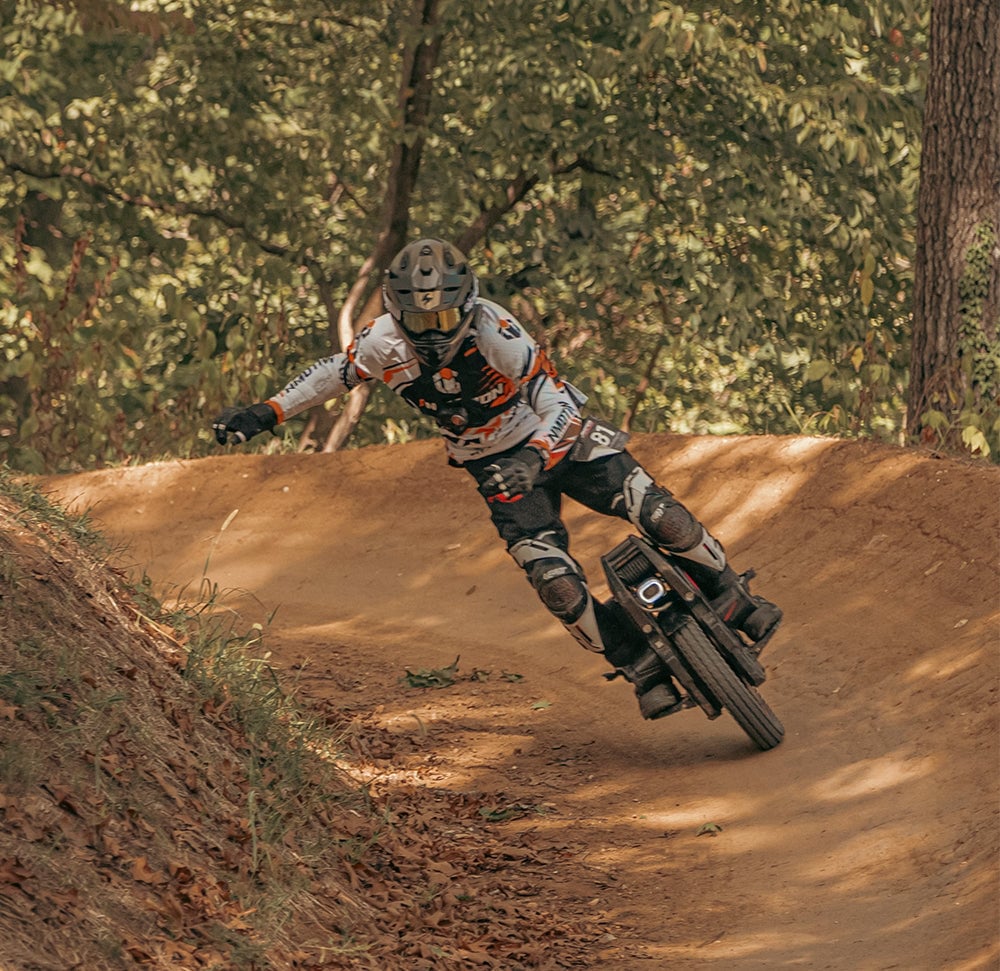
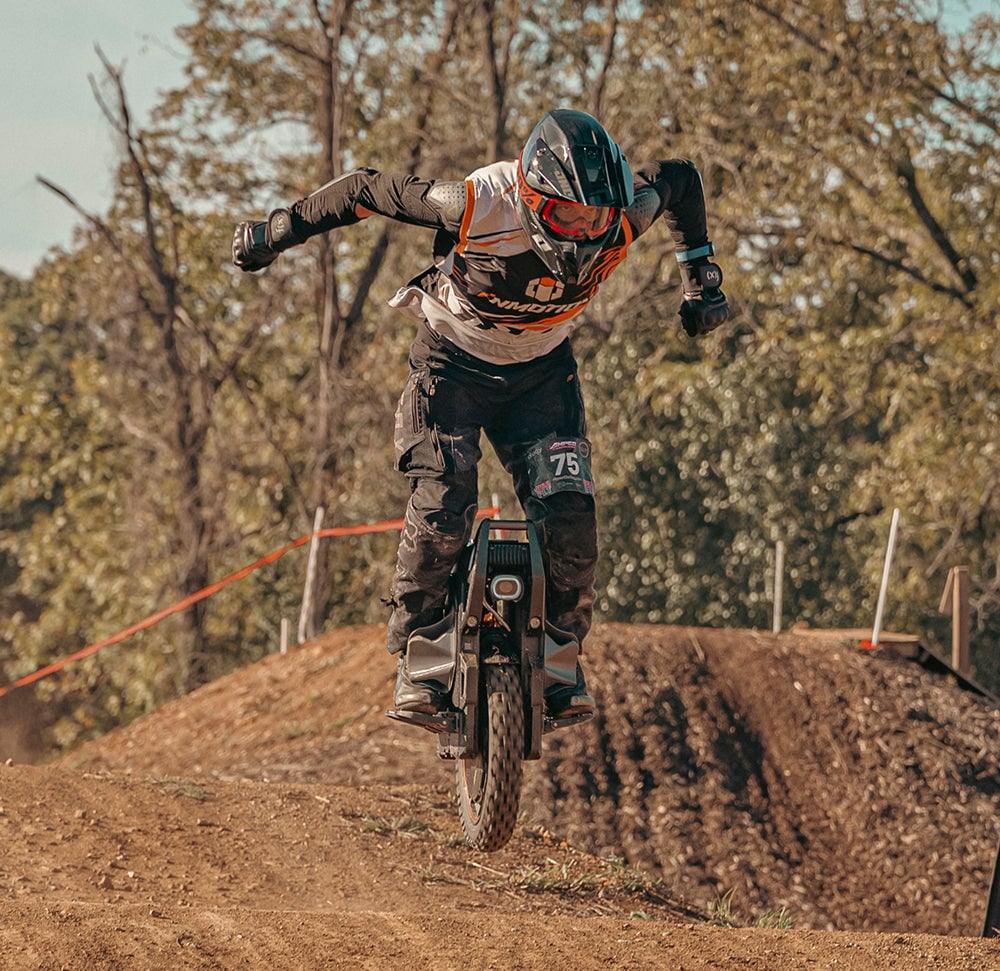
Some riders look past pavement entirely, and this is where Inmotion‘s off-road-oriented unicycles come in. The V14 Pro raises its top speed from 43.5 mph to 50 mph and increases torque from 230N·m to 276N·m compared to earlier specification, giving it noticeably more power for rougher ground. It uses It’s custom progressive suspension and can conquer 50° inclines thanks to 850N of wheel traction, a figure aimed squarely at technical terrain rather than smooth streets.
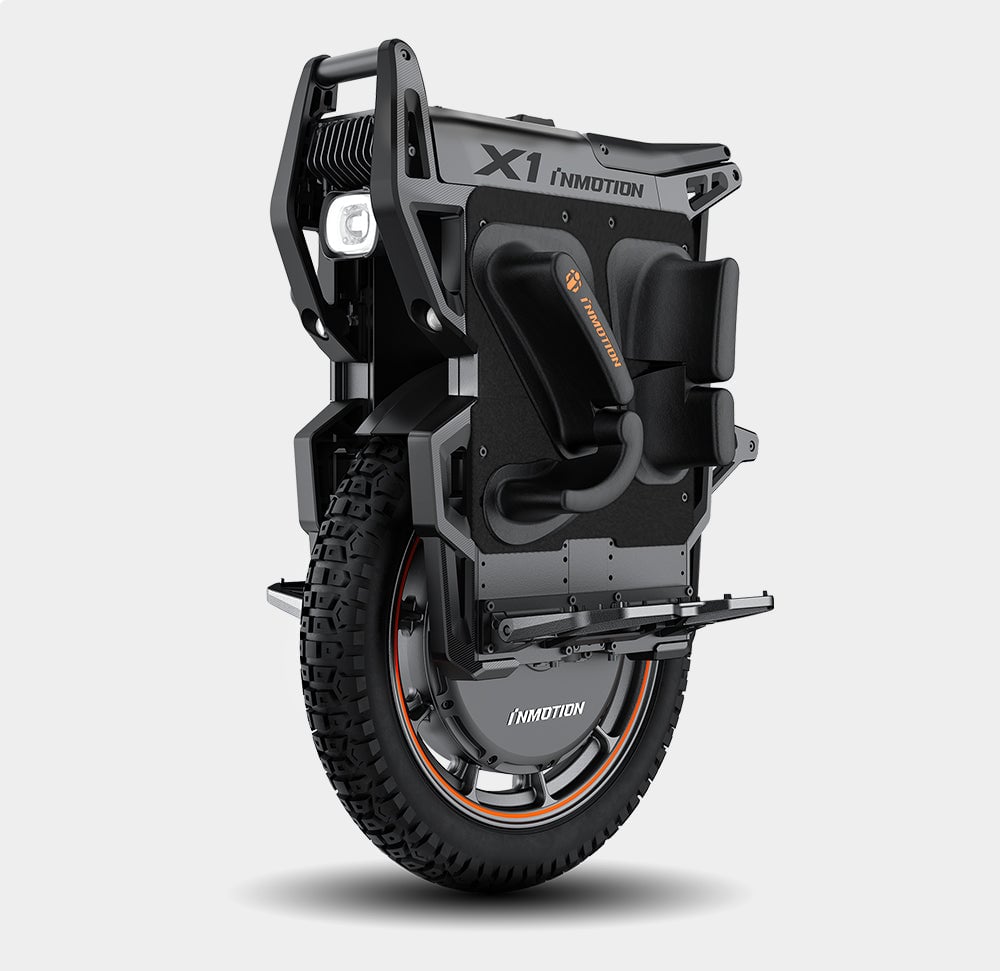
The X1 sits at a different point in the lineup, built on a 235.2V max platform with 340 N·m of max torque and 6kW of rated power. That combination of voltage and torque places the X1 among the more demanding electric unicycles in the catalogue, intended for riders who want a wheel that can handle varied surfaces without losing composure.
Portable and Lightweight Options: Inmotion Air Series for Last-Mile Transport
Not every ride calls for off-road torque or long range, and the Air series addresses that gap. The INMOTION Air offers a portable, foldable design with a 22-mile range and a 19 mph max speed, built around a dual braking system and a streamlined shape for easy carrying. It is aimed squarely at last-mile trips rather than long commutes or trail riding.
The Air Pro steps up slightly, with a 750w peak power rear-drive motor, a 30-mile range, and a 22mph top speed. Its 400w brushless motor and rear-wheel drive let it take on slopes up to a 20% grade, and built-in turn signals help communicate direction in traffic. Both Air models stay focused on portability, which separates them from the heavier, longer-range scooters elsewhere in the lineup.
High-Performance Models: P6 and RS Jet for Speed and Power
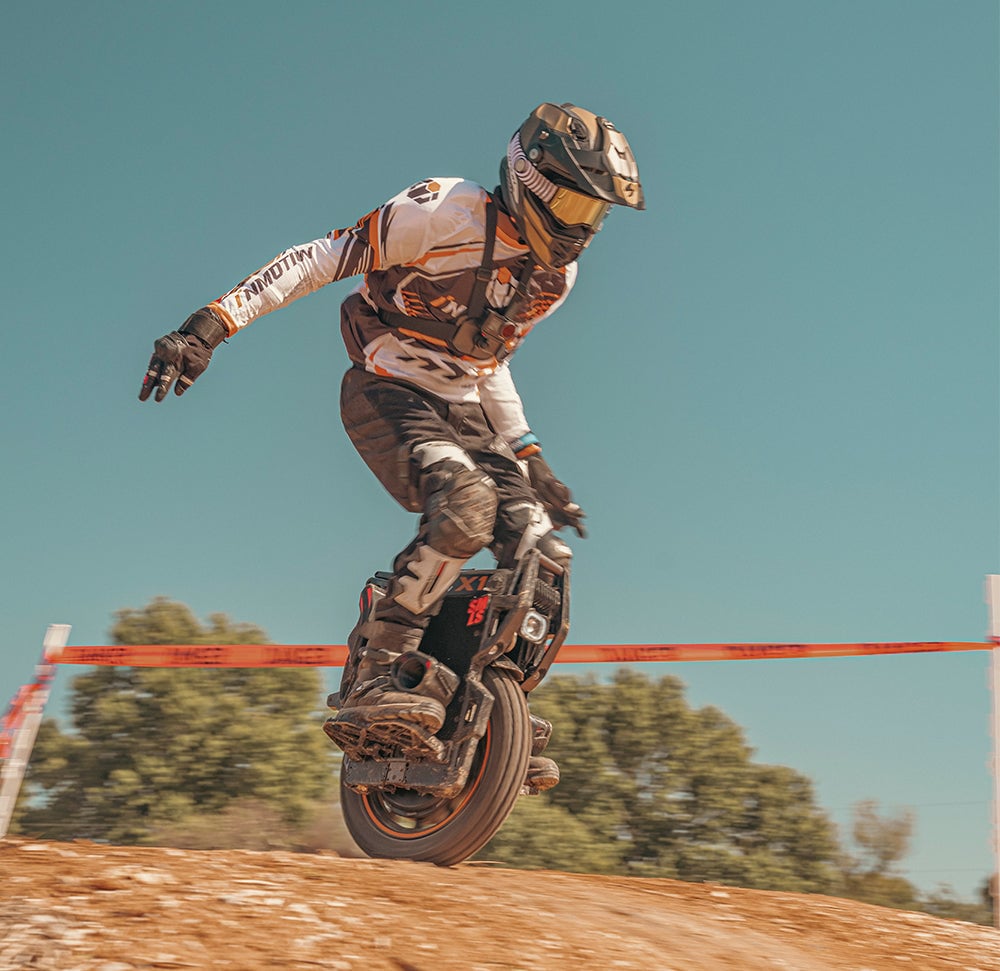
At the performance end, Inmotion‘s P6 electric unicycle reaches a 93mph top speed and accelerates from 0 to 30 mph in just 1.9 seconds. It runs on a 235V high-voltage platform with peak power of 20KW and uses 90mm hydraulic suspension with dual-speed damping to absorb bumps at speed. These figures place the P6 among the fastest electric unicycles in Inmotion’s current range.
On the scooter side, the RS Jet reaches a 50 MPH top speed with up to 62 miles of range, powered by dual 1200W motors. It includes adjustable ride height and smooth suspension control, giving it a different profile from the compact Air series while still staying within the scooter format. Comparing the P6 and RS Jet side by side highlights how electric unicycles vs scooters can both reach serious speed, just through different mechanical layouts.
RideConnect: Inmotion’s Anti-Theft and Tracking System Across Both Lines
RideConnect appears across both electric unicycles and electric scooters in the lineup, including the V9, V12S, and RS Jet. On each of these models it is described as anti-theft protection with remote lock, tracking, and alerts. Riders can also add 12-month or 24-month RideConnect Service plans as accessories, extending that coverage beyond what ships with the vehicle.
Because RideConnect spans both product lines, it functions as a shared feature rather than something exclusive to one format. That consistency matters when comparing electric unicycles vs scooters, since security features do not need to be a deciding factor between the two categories. The deciding factors tend to come down to balance, deck format, and terrain instead.
- Electric unicycles typically involve a steeper initial learning curve since riders balance on one wheel rather than standing on a platform.
- Electric scooters generally offer more immediate stability thanks to their two-wheel, stand-on deck design.
- Range varies widely within each category, from the Air’s 22 miles up to the S1F’s 59 miles among scooters, and up to 75 miles on the V11Y among unicycles.
- Climbing ability differs by model rather than by category, with the Climber scooter handling 36% inclines and the V14 Pro handling 50° inclines.
- Ideal riding environments split between paved city commuting, favored by models like the C10, and technical or off-road terrain, favored by models like the X1 and V14 Pro.
Choosing Between the Two Formats
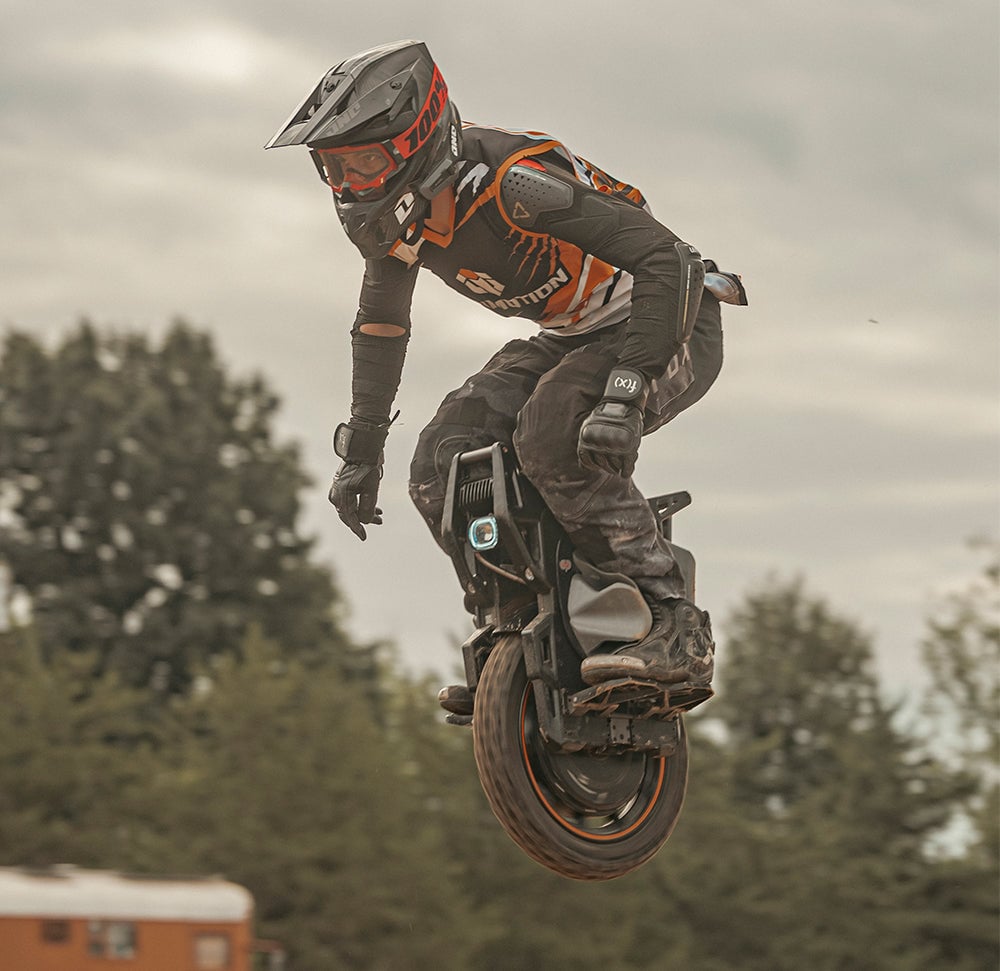
Electric unicycles and electric scooters solve overlapping transport problems in different ways, and Inmotion‘s catalogue makes that difference visible model by model. Whether the priority is portability, climbing power, or top speed, the specifications attached to each named model stay the clearest guide.

Sorry, the comment form is closed at this time.