
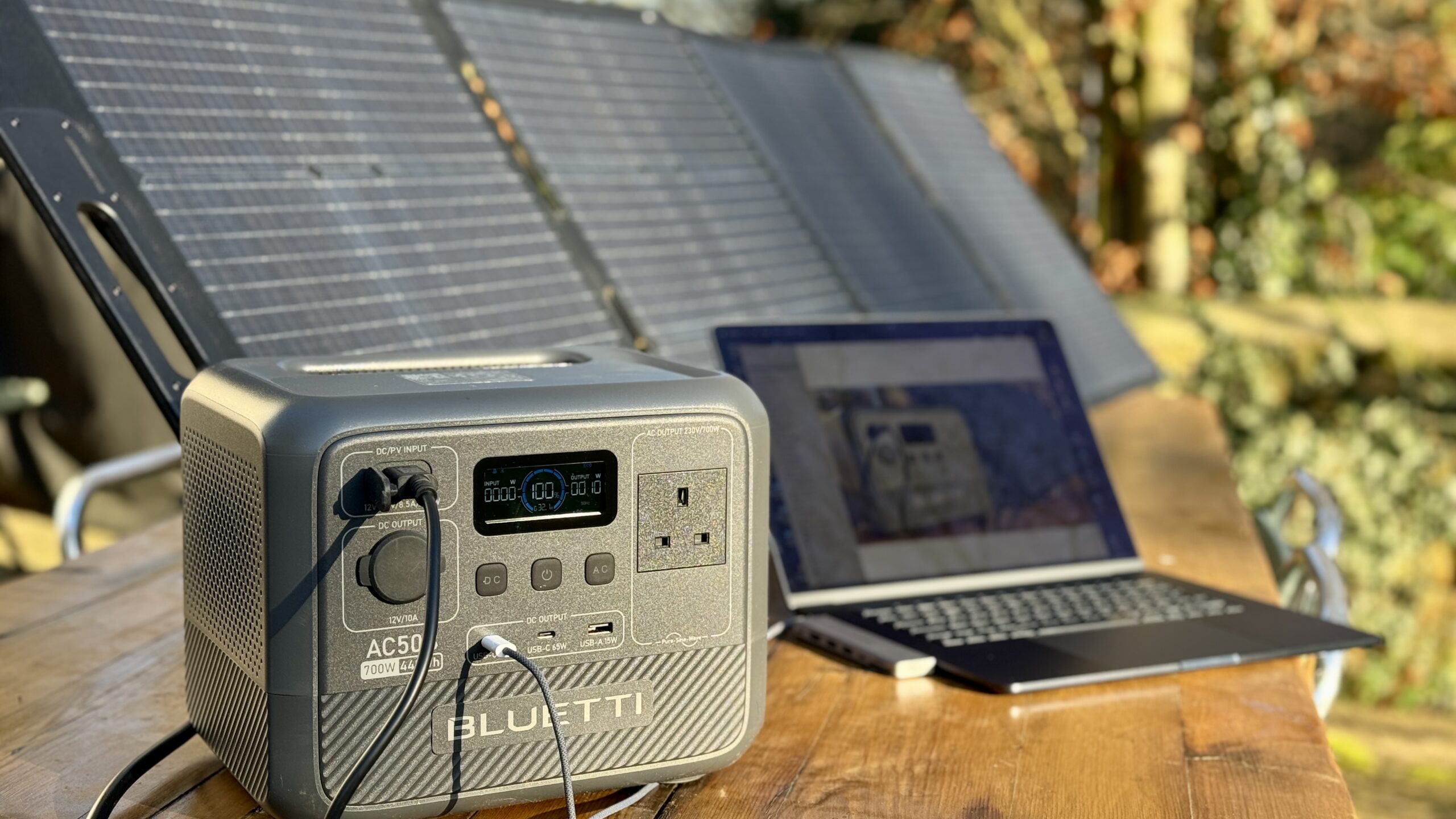
30 Oct Elite 300 vs. Apex 300 Key Differences in BLUETTI’s 3kWh Power Station Lineup
Choosing between two 3kWh-class power stations often comes down to details that never show up in a quick spec glance. The Elite 300 vs Apex 300 comparison is a good example, since both sit near the same capacity but take different approaches to output, expansion, and intended use. For anyone already familiar with portable power stations, the real question is which architecture fits a specific setup, not just which number looks bigger.
Elite 300 vs. Apex 300: Core Architecture and Output Differences
BLUETTI US builds the Elite 300 as a self-contained 3,014Wh unit with 2,400W of continuous output, marketed as the smallest 3 kWh portable power station in its class. The Apex 300 takes a different path, pairing 2,764.8Wh of base capacity with a much higher 3,840W output rating. That gap in output wattage, despite similar capacity figures, is the clearest architectural signal that these two units were designed for different jobs.
The Elite 300 is positioned as a compact, grab-and-go unit, while the Apex 300 is described as a backup power platform meant to start simple and scale. Both run on similar watt-hour totals, but the internal power electronics clearly diverge once output and expansion are factored in.
Why Output Matters: 2,400W vs. 3,840W for Real-World Loads
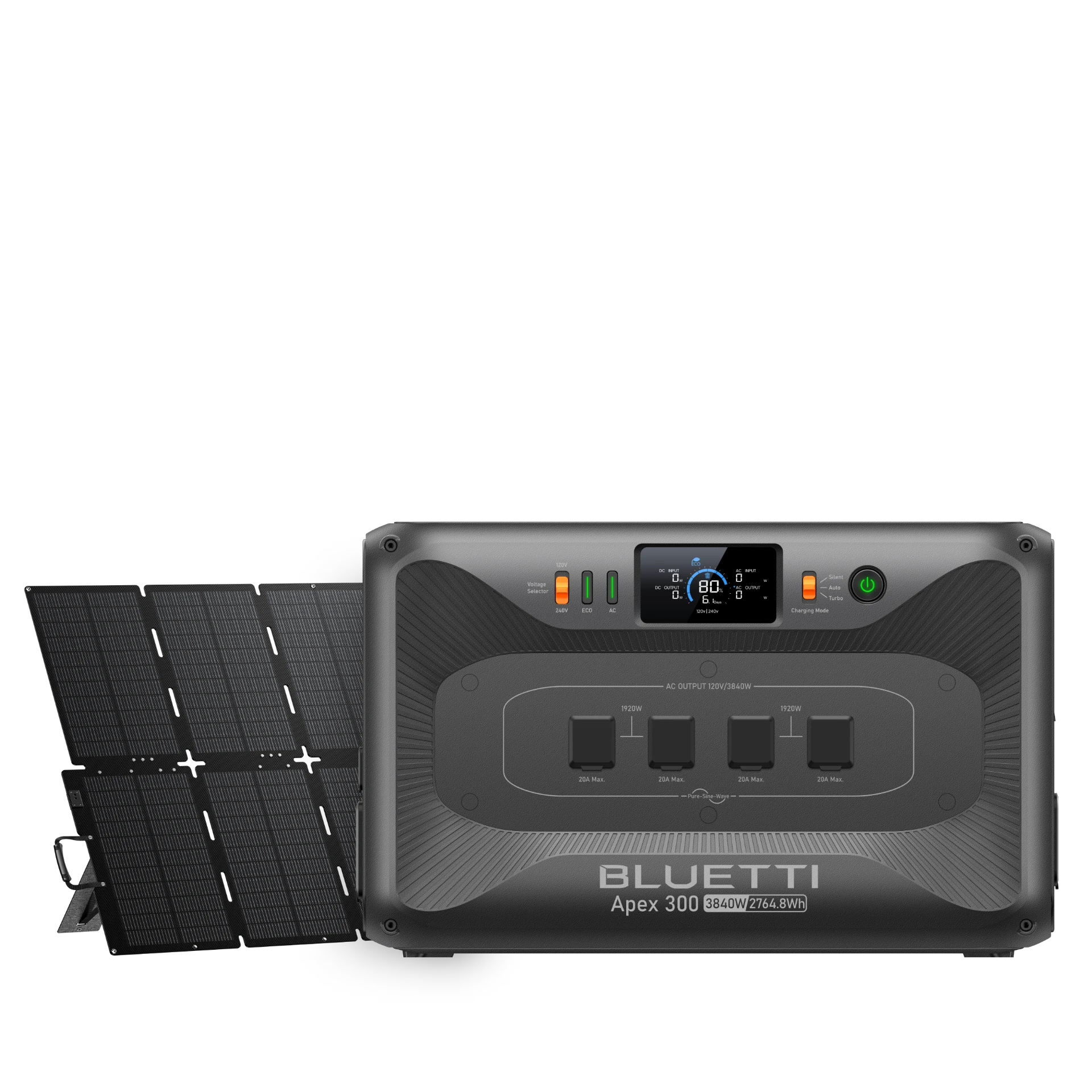
Output wattage decides which appliances can run at once, not just how long they run. At 2,400W, with a 4,800W lifting capability, the Elite 300 can manage microwaves and heaters alongside smaller electronics. The Apex 300, with its 3,840W rating and listed 120V/240V support, is built to carry a heavier combined load, which matters for whole-circuit or multi-appliance backup.
This is where the Elite 300 vs Apex 300 decision becomes practical rather than theoretical. A single large appliance plus several small devices may sit comfortably within the Elite 300’s range. A setup that needs simultaneous heavy-draw equipment, such as refrigeration plus cooking appliances plus lighting, leans toward the Apex 300’s higher ceiling.
Battery Chemistry and Cycle Life in the Elite 300 and Apex 300
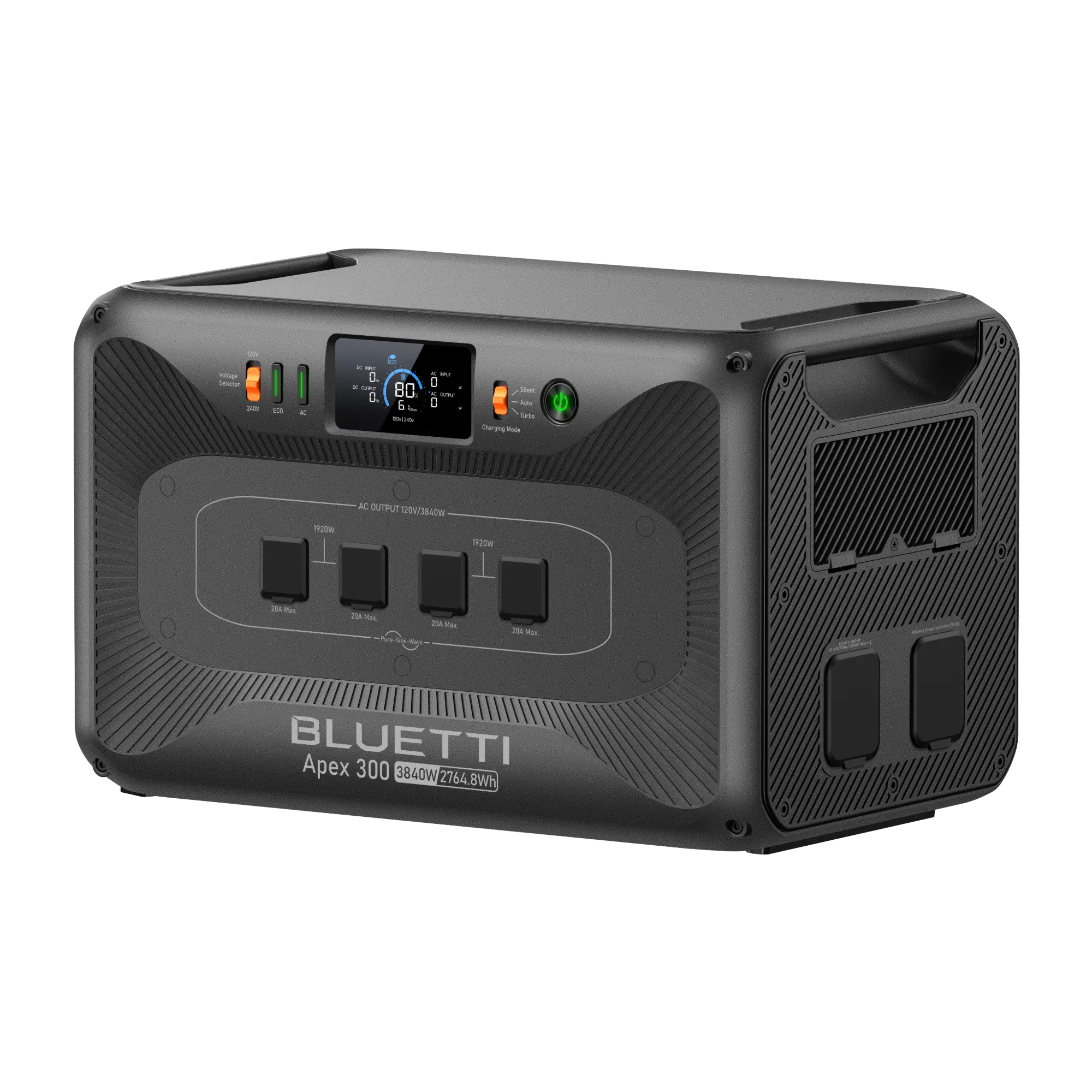
The Elite 300 is rated for 6,000+ charge cycles, and because its battery and electronics sit fixed inside one chassis, that figure applies to the whole unit exactly as shipped. The Apex 300 is also built around LiFePO₄ battery packs, shown across its expansion configurations such as the B300K and B500K add-ons. Both platforms rely on the same general battery family, but the way that capacity gets packaged differs sharply between the two.
The Apex 300’s modular packs mean cycle life and total capacity are tied to whichever combination of battery modules is attached at a given time. That structural difference, fixed versus modular, is a major reason the two units from BLUETTI US serve different kinds of buyers even with comparable starting capacity.
Expandability: Standalone vs. Modular System Design
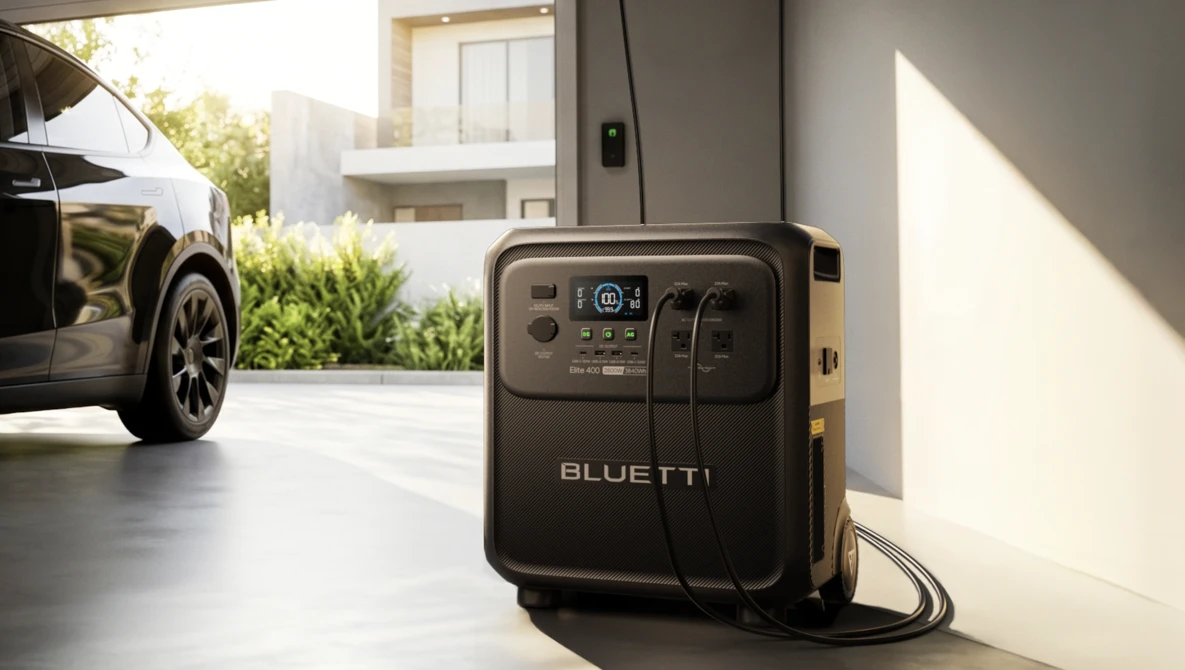
This is the sharpest dividing line in the Elite 300 vs Apex 300 comparison. The Elite 300 ships as a fixed-capacity unit, with its listed bundles adding solar panels or chargers rather than additional battery packs. The Apex 300 line, by contrast, is built around modular expansion.
Product listings show Apex 300 configurations paired with a B300K module for 5,529.6Wh total, a B500K module, two B300K modules reaching 8,294.4Wh, and even two Apex 300 units joined with a Hub A1 for 7,680W output and 11,059.2Wh of combined capacity. That range of combinations is not available on the Elite 300 platform at all, and it is one of the clearest ways BLUETTI US separates the two product lines.
- The Elite 300 delivers 2,400W output and 3,014Wh of fixed capacity in a single enclosure.
- The Apex 300 delivers 3,840W output paired with a base capacity of 2,764.8Wh that can be expanded with B300K or B500K modules.
- Charging options for the Elite 300 bundles include solar inputs of 350W or 500W depending on the chosen kit.
- Apex 300 bundles extend solar input further, with configurations listed up to 700W when paired with dual 350W panels.
- Only the Apex 300 line supports multi-unit scaling, as shown in the configuration combining two Apex 300 units with a Hub A1 accessory.
- The Elite 300 includes a 12V/30A DC port alongside its TT-30 outlet, while Apex 300 listings highlight 120V/240V support for home-style circuits.
RV and Home Integration: TT-30 Outlets and UPS Response Times
For RV owners, the Elite 300 includes a dedicated TT-30 outlet, letting an RV plug in directly without an adapter, plus a 12V/30A DC port for lights and smaller RV appliances. The listing also notes a 10ms UPS switching time for the Elite 300, aimed at keeping security systems, aquariums, and workstations running through brief outages. That response speed matters for equipment that cannot tolerate even a short gap in power.
The Apex 300 is framed more around home backup scenarios, with its listing describing it as keeping a refrigerator, lights, television, and WiFi running during short outages. Its 120V/240V compatibility points toward integration with home circuits rather than RV-specific hookups. Both units support app-based monitoring, a feature available across the broader BLUETTI US lineup as Bluetooth and WiFi connectivity for remote status checks.
When to Choose Elite 300 Over Apex 300
The Elite 300 fits scenarios where portability and a self-contained design matter more than future expansion. Its compact footprint, described as 3kWh power in a 2kWh-sized body, suits RV travel, workstations, or home use where a single fixed unit is enough. There is no need to plan around additional battery modules when the full capacity is already built in.
The Apex 300 suits situations where power needs might grow over time, since its modular packs and multi-unit hub support allow a system to expand well beyond its starting capacity. Anyone anticipating a move from a single appliance backup to a broader home setup may find that scalability more relevant than the Elite 300’s fixed simplicity. BLUETTI US positions the Apex 300 specifically around that start-simple, scale-later framing in its own product description.
Both platforms draw on the same general LiFePO₄ battery category and similar watt-hour ranges, which is why the Elite 300 vs Apex 300 distinction depends on output and expansion rather than raw capacity.

Sorry, the comment form is closed at this time.