
30 Oct Trauma Response vs. Everyday First Aid How SurviveX Kits Address Different Emergency Scales
Experienced first aiders rarely ask which kit is biggest. They ask which kit treats which injury, and how deep the supply runs once the obvious scrapes are covered. Understanding first aid kit differences matters more than counting items, because two kits with similar supply counts can still be built for very different emergencies. Survive X US organizes its lineup around wound severity and situation rather than group size alone, which gives a more useful starting point for comparison.
Wound Severity and Supply Depth: Large First Aid Kit Versus Large Pro First Aid Kit
The Large First Aid Kit from Survive X US carries 250 professional-grade supplies arranged in labeled compartments, built to cover 3 to 4 people, and it leans on high-utility wound, burn, sprain, and trauma items rather than the low-cost filler found in standard consumer kits. The Large Pro First Aid Kit steps up from there to 270 professional-grade supplies and is positioned to cover 5 to 6 people instead. That jump in count is not just volume for its own sake. It reflects a shift toward heavier bleeding control and more advanced wound management, which is where the real first aid kit differences start to show.
Specialized Trauma Supplies in the Large Pro Model
Survive X US describes the Large Pro First Aid Kit as carrying expert-selected supplies that cover situations basic kits cannot, including burns, deep cuts, and heavy bleeding. It also includes splints, CPR tools, and Zip Stitch wound closures, according to the brand’s own product listing. The same listing describes a quad-fold rapid access layout, with four panels that fold open flat and compartments that stay labeled and color-coded. That structure, as described by the brand, is meant to let someone see supplies at a glance rather than dig through a single pouch during an emergency.
The Waterproof Advantage: When Environment Matters More Than Kit Size
Not every first aid kit differences conversation is about what sits inside the bag. Sometimes the deciding factor is whether the bag survives the environment at all. The Large Waterproof First Aid Kit from Survive X US carries the same 250 professional-grade supplies as the standard Large kit and covers wounds, burns, sprains, and more, but it is also mountable and MOLLE compatible, which the standard Large kit’s listing does not claim. On top of that, it adds an IPX7 rating and can be submerged for up to 30 minutes, which suits boats, kayaks, and wet-weather conditions where a standard nylon pouch would fail long before the supplies inside ever got used.
Color-coded sleeves and labeled compartments carry over from the rest of the range, so the organization system stays familiar even when the shell changes. This is one of the clearer examples of how the brand treats environment as its own axis, separate from group size or injury severity. A kit built for a dry garage drawer and one built for open water solve different problems, even if the supply list looks similar on paper.
Wound Closure Without Medical Intervention: The Zip Stitch Approach
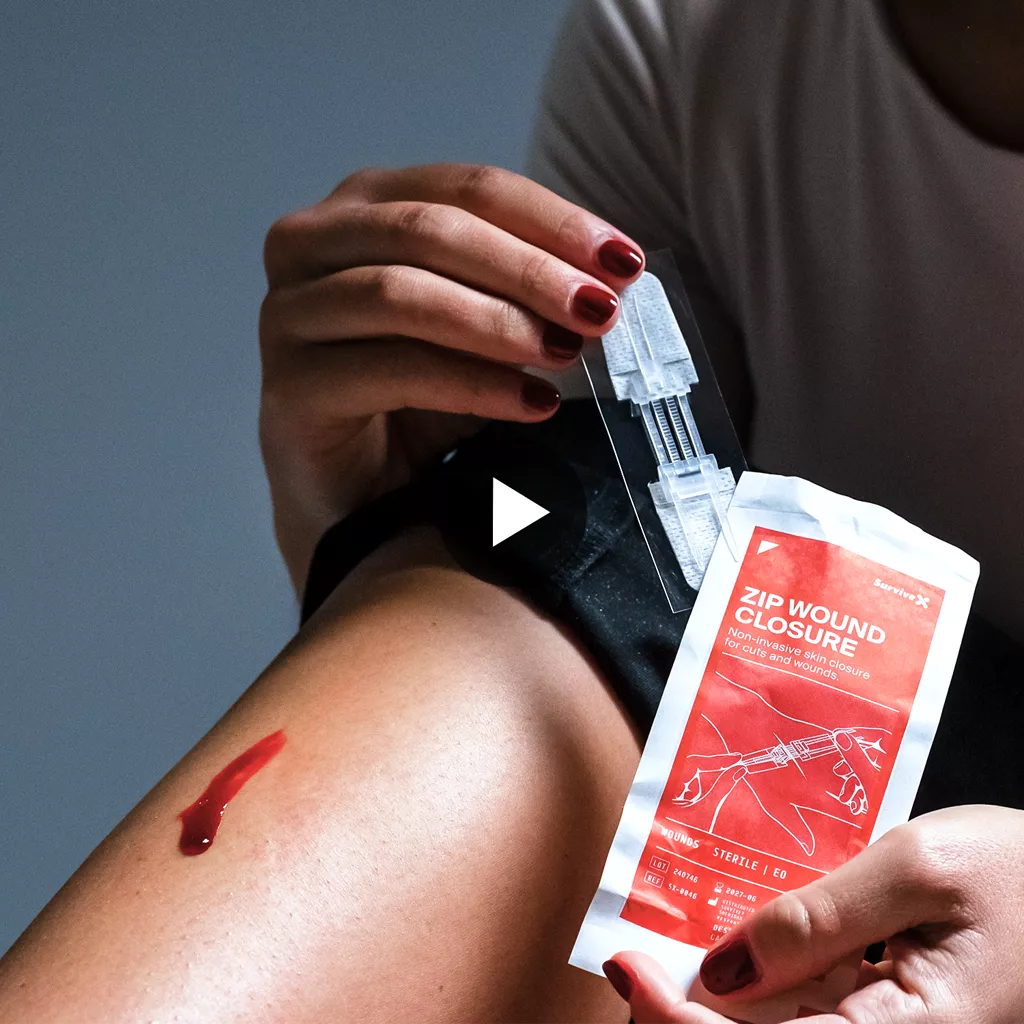
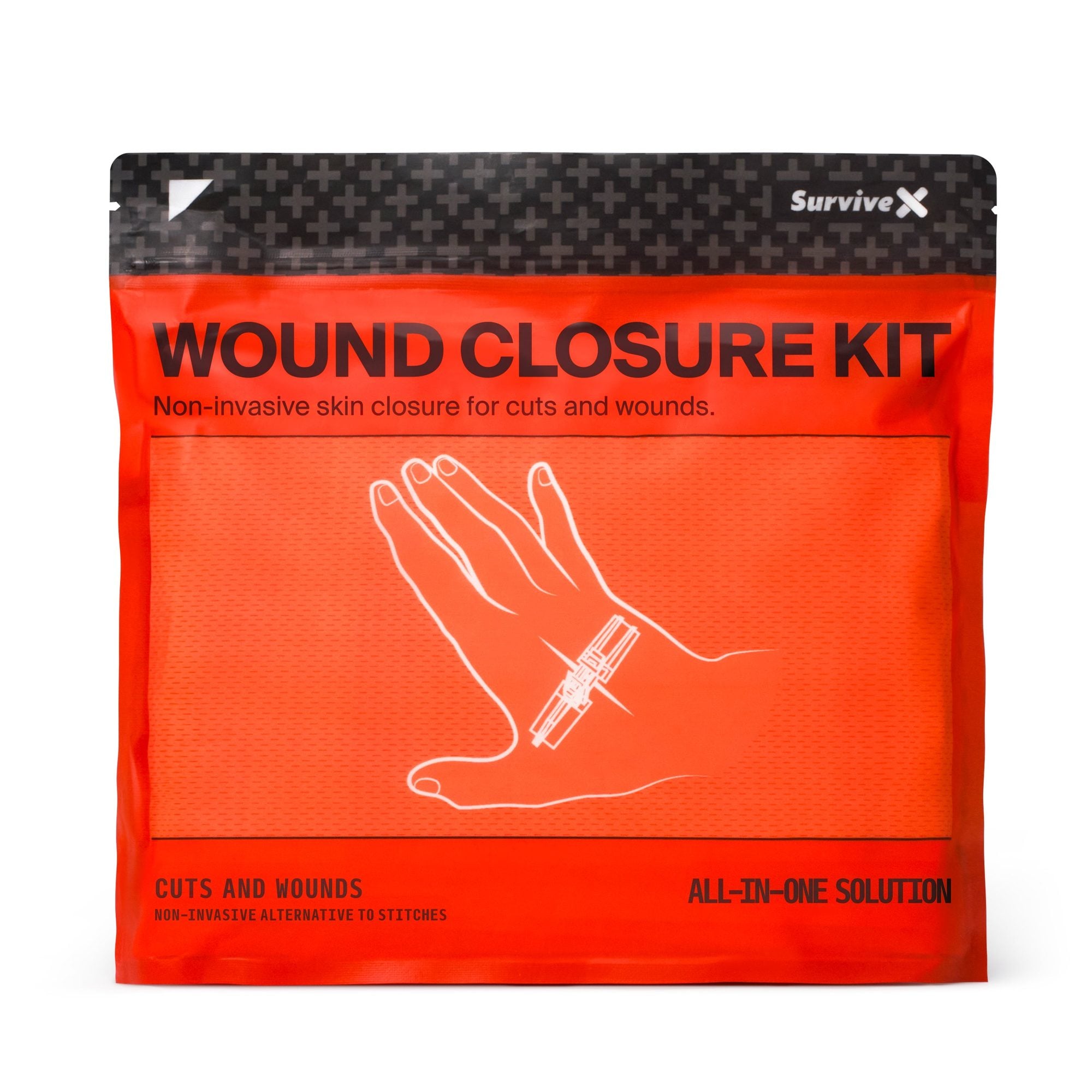
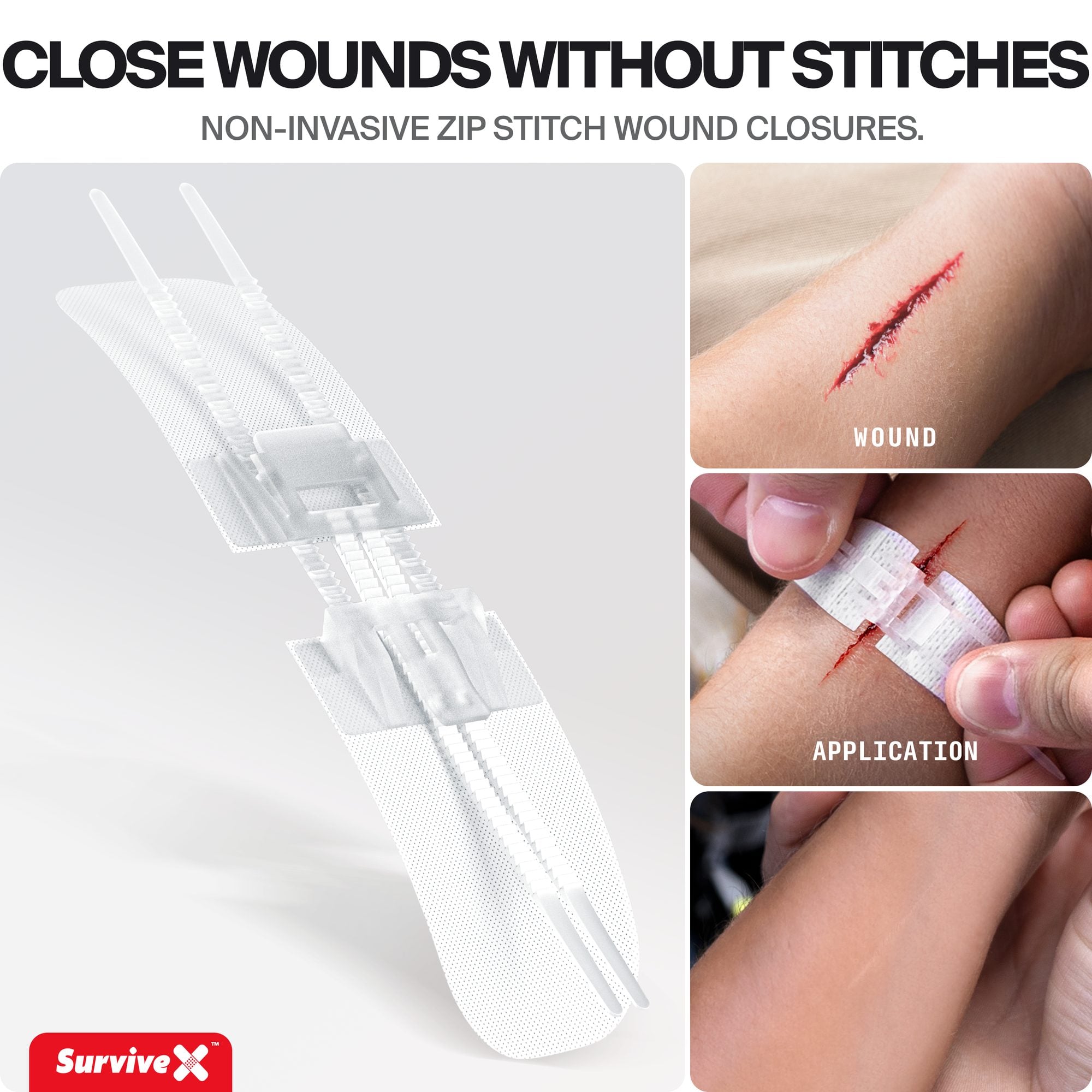
The Zip Stitch Wound Closure Kit is listed by Survive X US as a non-invasive alternative to stitches for small cuts and lacerations. It is adhesive-based, so nothing pierces the skin, and the design lets someone pull skin edges together and adjust tension for an even close. A slim 3-pack of Zip Stitch closures is also sold separately as a refill option, meant to restock a kit, car, or pack without buying the full closure kit again. Both versions appear as components inside the Large Pro First Aid Kit as well, which ties this single-issue product back into the larger trauma-focused kit.
Single-Issue Kits and Refill Strategy for Experienced Preparedness
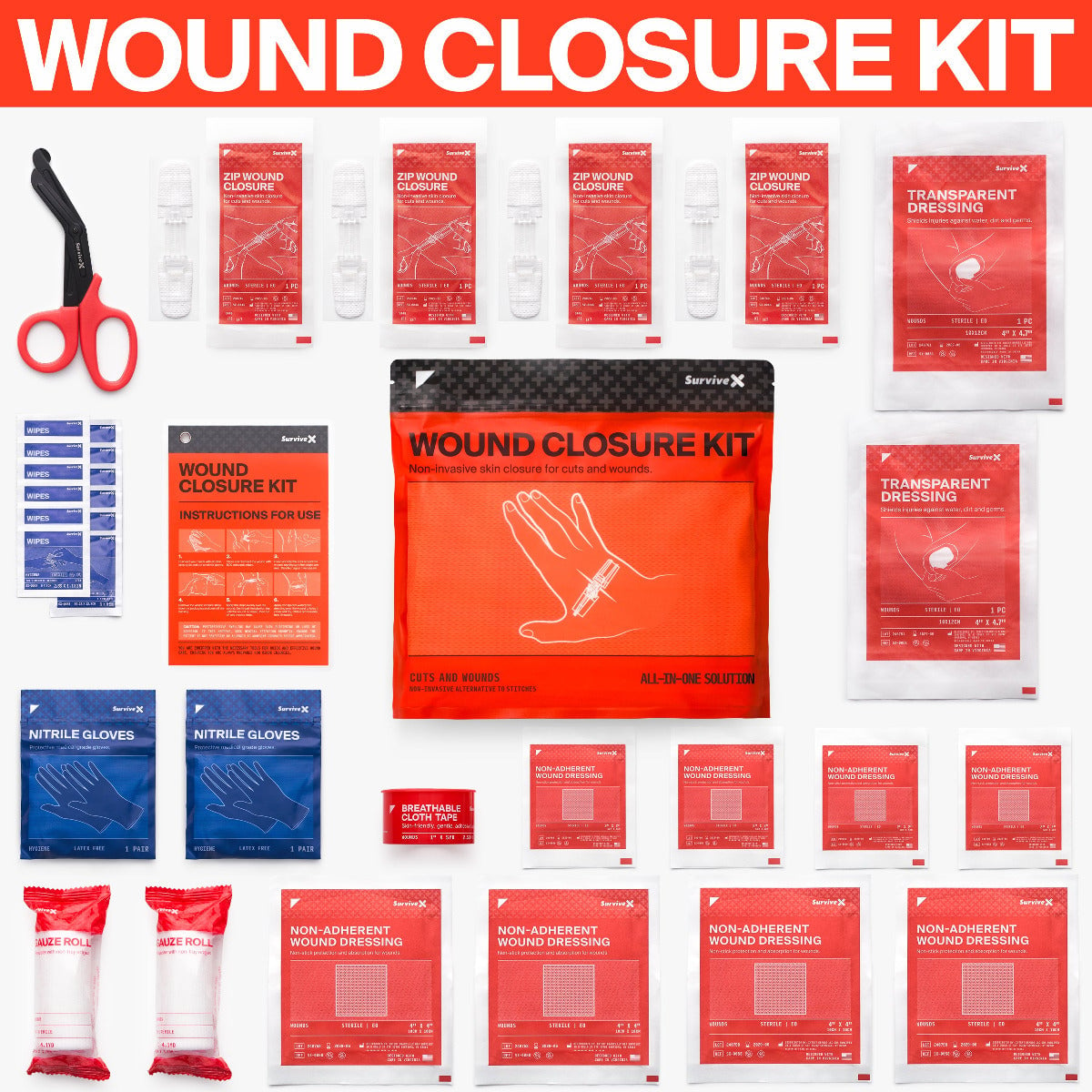
Beyond the large kits, the catalog includes single-purpose products built around one category of injury. The Burn Care Kit carries individually wrapped hydrogel dressings infused with tea tree oil, and a separate 5-pack of Hydrogel Burn Dressings exists specifically to restock that kit or a kitchen, camp, or worksite setup. Hemostat Gauze is listed for bleeding that gauze alone cannot handle, vacuum-sealed for shelf life and a compact footprint. The Emergency Bandage, sold in a 6-inch version, includes a built-in pressure applicator and is sterile, vacuum-sealed, and rated for a 5-year shelf life.
These single-issue items let someone who already owns a large kit top up a specific category instead of replacing the whole setup. A person who uses Zip Stitch closures often might keep the 3-pack on hand as a refill, while someone treating frequent minor burns might lean on the 5-pack hydrogel dressings. Thinking in terms of refill strategy, rather than one static kit, is itself a response to first aid kit differences across use cases.
Building Redundancy Across Multiple SurviveX Products
Combining products from across the catalog is one way experienced preparedness gets built in layers rather than in a single purchase. A Small First Aid Kit, built for 1 to 2 people with 126 supplies in a glovebox-sized, MOLLE-mountable design, can sit in a vehicle, while the more comprehensive Large Pro First Aid Kit stays at home for heavier trauma needs. Adding a Mini Flashlight, a compact 600-lumen tool sold separately by Survive X US, gives either location a way to see a wound clearly after dark. The list below outlines where supply categories actually diverge between the Large and Large Pro models.
- The Large First Aid Kit carries 250 professional-grade supplies, while the Large Pro First Aid Kit carries 270.
- The Large Pro model adds splints and CPR tools that are not part of the standard Large kit’s listed contents.
- Zip Stitch wound closures are included as a named component of the Large Pro kit’s supply set.
- The Large Pro kit is built to cover 5 to 6 people, compared with 3 to 4 people for the standard Large kit.
- The Large Pro kit’s listing describes a quad-fold, four-panel layout, while the standard Large kit’s listing describes labeled compartments without that specific fold structure.
Pairing a large home kit with a compact vehicle kit, and then adding single-issue refills like Hemostat Gauze or the Zip Stitch 3-pack, spreads coverage across locations instead of concentrating it in one bag. The North American Rescue CAT Gen 7 Tourniquet, sold separately by Survive X US, is another example of a focused trauma item that can supplement a larger kit rather than replace it. Layering products this way is less about brand loyalty and more about matching supply depth to where an emergency is likely to happen.
Matching a kit to an actual injury, rather than to a headcount on a label, is what turns a supply list into something usable under pressure.

Sorry, the comment form is closed at this time.